Table of Contents: How to Choose Wattage for Light Bulbs
- How to Choose Light Bulb Wattage
- Brighten Your Landscape with the Right Light Bulb Wattage
- FAQs for Light Bulb Wattage
Light bulb wattage is one of the most important—and most misunderstood—factors when planning your outdoor lighting. Choosing the right wattage ensures your yard is bright enough to highlight features, provide safety, and create atmosphere without harsh glare, wasted energy, or blown-out focal points.
The goal is balance: enough light to enhance your landscape while keeping it inviting and functional.
How to Choose Light Bulb Wattage
Choosing the correct wattage is key to achieving the perfect balance of brightness, energy efficiency, and ambiance in your landscape lighting.
Too little light can leave important features in shadow, while too much can create harsh glare or wash out your carefully designed lighting layers. Here’s how to select the right wattage for every application.
1. Start with Lumens
Traditionally, wattage measured brightness. Today, especially with LED landscape lighting, lumens are the better indicator of how bright a bulb will appear. Watts now tell you how much energy the bulb uses, not how much light it produces.
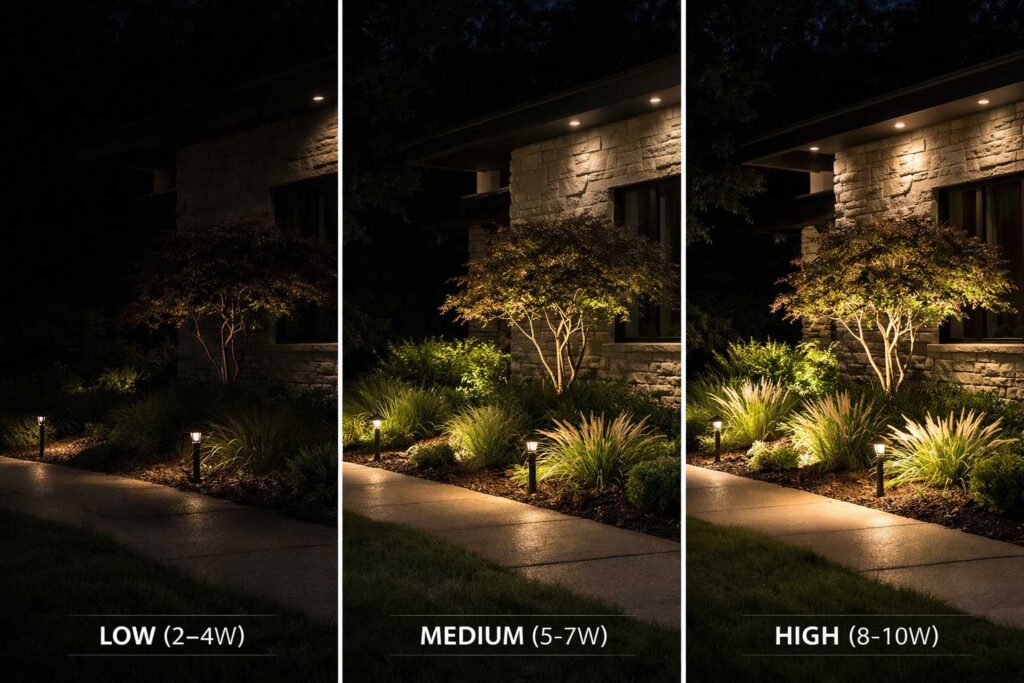
- Low-Watt LED Bulbs (2–4W): These bulbs produce approximately 150 to 300 lumens, making them ideal for subtle lighting applications such as pathways or small garden accents.
- Mid-Range LED Bulbs (5–7W): Bulbs in this range generate roughly 300 to 500 lumens, providing moderate brightness suitable for garden beds, accent lighting, or smaller architectural features.
- Higher-Output LED Bulbs (8–10W+): These bulbs can exceed 600 lumens, delivering the intensity needed to illuminate larger features such as tall trees, building facades, or expansive landscape areas.
Most landscape lighting applications work best in the 150–400 lumen range, depending on what you’re lighting.
2. Match Wattage to the Lighting Application
Matching the wattage to each lighting application keeps your landscape safe, functional, and visually appealing—creating the right atmosphere without wasting energy.
Different outdoor features and purposes require different levels of brightness.
| Lighting Application | Recommended LED Wattage | Purpose & Effect |
| Pathway & Walkway Lights | 2–4W | Provides safe navigation and visibility without glare or light spill into surrounding areas. |
| Garden Beds & Accent Lighting | 3–5W | Softly highlights plants, textures, and landscape layers without washing out color or shadows. |
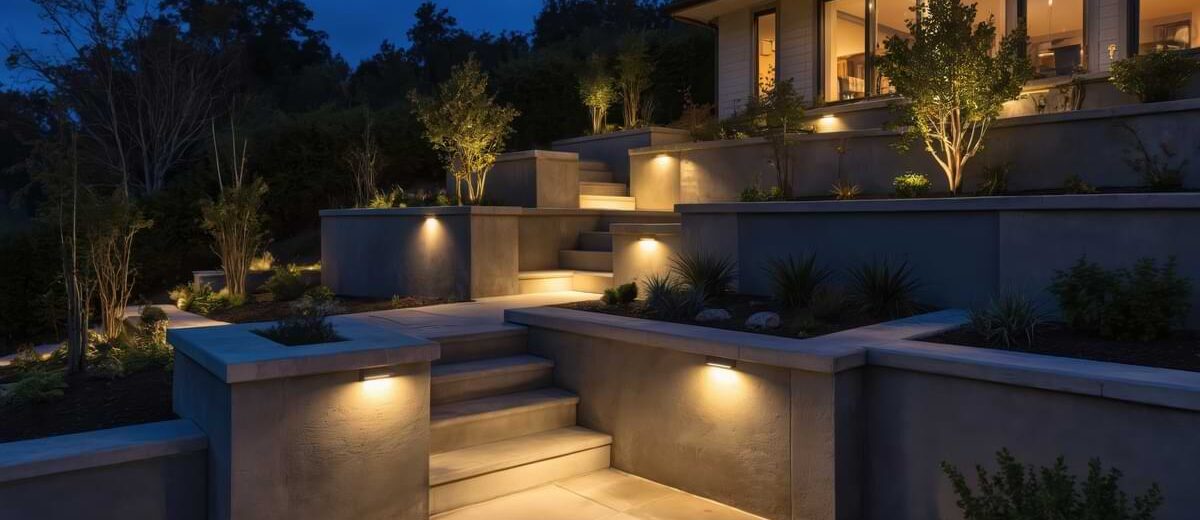
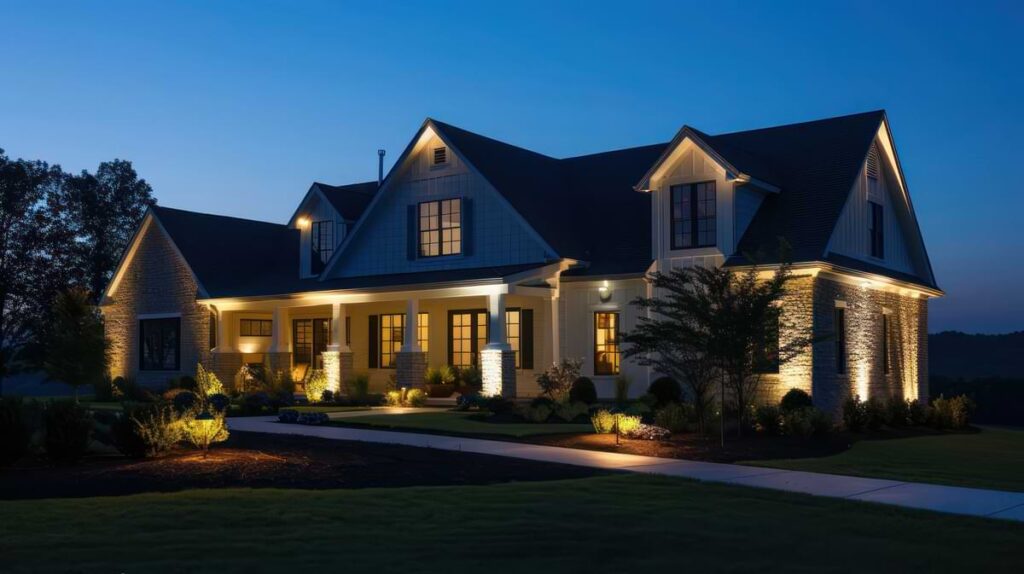
| Uplighting Trees & Architectural Features | 5–9W | Delivers enough brightness to illuminate larger features, tall trees, and building facades from a distance. |
| Security & Area Lighting | Varies (use higher wattage as needed) | Offers wider coverage for entrances and garages while minimizing glare and harsh shadows. |
3. Consider Fixture Type and Beam Spread
Wattage alone doesn’t determine how bright your outdoor lights will look. Beam angle, fixture style, and lighting placement all play a major role in how light is distributed across your landscape.
- Fixture Style: Spotlights concentrate light into a narrow beam, making lower-watt bulbs appear brighter, while floodlights spread light over a wider area and require higher lumen output for the same visual impact.
- Mounting Height: Lights mounted higher off the ground need more wattage or lumens to effectively reach the intended feature without losing intensity.
- Distance From The Feature: The farther the fixture is placed from the object being lit, the more light output is needed to maintain clarity and definition.
4. LED Wattage Goes Further
Modern LED bulbs produce significantly more light using far less energy, making them the preferred choice for landscape lighting upgrades and new installations.
- Halogen To LED Conversion: A 20W halogen bulb can often be replaced with a 4–5W LED bulb while delivering comparable brightness.
- Energy Efficiency: Using 70–80% less wattage reduces overall power consumption and lowers operating costs.
- System Capacity: Lower wattage bulbs generate less heat and allow more fixtures to run safely on the same transformer.
5. Avoid Overlighting
One of the most common mistakes in landscape lighting design is choosing bulbs that are too powerful. Outdoor lighting should enhance your property after dark, not overwhelm it.
- Visual Comfort: Excessive brightness creates glare and harsh contrast that can make outdoor spaces uncomfortable and less usable.
- Natural Depth: Lower wattage bulbs preserve shadows and highlights, adding dimension and texture to plants and architectural features.
- Design Balance: Layered lighting with softer outputs results in a more polished, professional, and inviting nighttime landscape.
Brighten Your Landscape with the Right Light Bulb Wattage
Choosing the right light bulb wattage is about more than just numbers: it’s about creating a balanced, inviting outdoor environment that highlights your home’s best features while providing safety and functionality.
By considering lumens, fixture type, placement, and LED efficiency, you can achieve professional-looking results without overlighting or wasting energy.
FAQs for Light Bulb Wattage
Wattage measures the amount of energy a light bulb consumes, not necessarily how bright it will appear. Higher wattage bulbs use more electricity, while lower wattage bulbs use less. With modern LED technology, brightness is better measured in lumens, which indicate how much light the bulb actually produces.
A traditional 40-watt incandescent bulb produces a moderate amount of light, roughly 450 lumens, which is enough for small spaces like bedrooms, hallways, or accent lighting. In LED terms, a 40-watt incandescent equivalent can usually be achieved with only 4–6 watts, providing the same brightness while saving energy.
No, it’s generally not safe to use a bulb rated higher than the fixture’s maximum wattage. Even though LEDs use less energy than incandescent bulbs, the fixture’s wiring and heat tolerance are designed for a maximum wattage. Using a higher-rated bulb could cause overheating, damage, or fire hazards.
Join our Insider list and check out the different lighting options that we have to offer.