Table of Contents: Outdoor Path Lighting
- What Is Path Lighting & How Does It Work?
- Common Types of Path Lights in Path Lighting
- Where Path Lights Are Typically Installed
- Path Lights vs. Other Landscape Fixtures
- Choose the Right Path Lights for Effective Path Lighting
- Path Lighting: Safety & Style for Your Outdoor Setup
- FAQs for Path Lighting
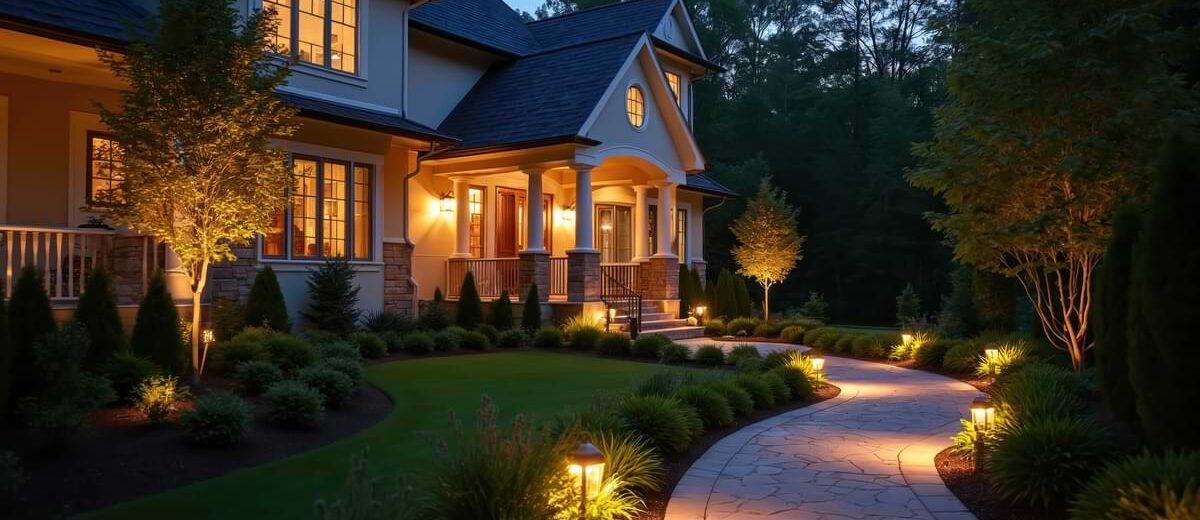
Path lighting consists of low-profile outdoor lighting fixtures designed to illuminate walkways, garden edges, driveways, and landscape borders. In landscape lighting systems, path lights provide both functional visibility and subtle ambient glow, helping people safely navigate outdoor spaces after dark while enhancing the property’s nighttime appearance.
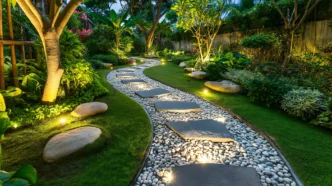
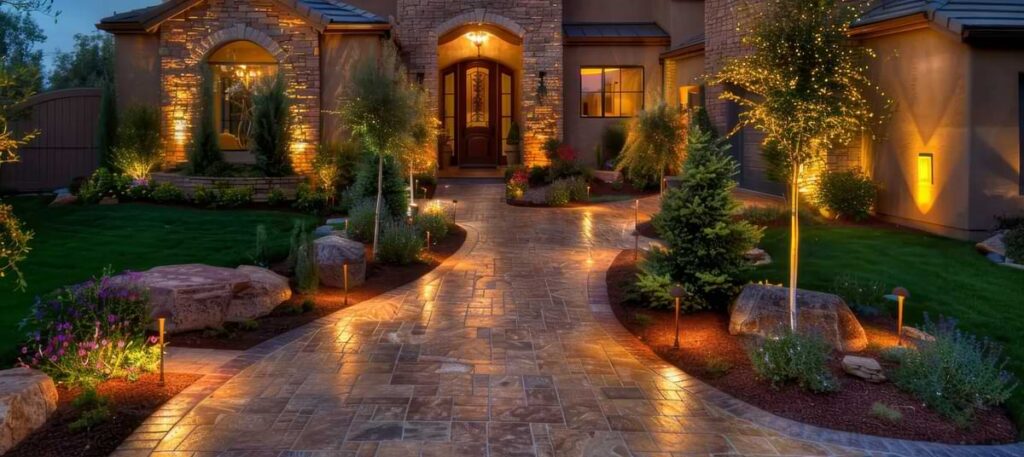
Installed along paths or planting beds, path lights create rhythm and depth across the landscape, guiding movement and highlighting design features without overwhelming the environment.
What Is Path Lighting & How Does It Work?
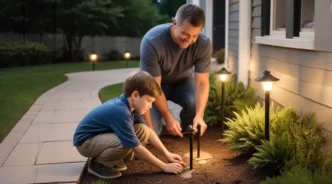
Path lights are typically part of a low-voltage lighting system powered by a transformer that reduces standard household voltage to 12V. Each fixture connects to underground low-voltage cable, allowing multiple lights to run from a single power source.
- Downward Illumination: Path lights use a shaded or capped design that directs light downward onto the walking surface, reducing glare and improving comfort for pedestrians.
- Spacing for Coverage: Fixtures are usually placed 6–10 feet apart, depending on brightness and beam spread, to create overlapping pools of light rather than harsh hotspots.
- Integrated or Replaceable LEDs: Modern path lights commonly use LED lamps or integrated LED boards for long life, low energy use, and minimal maintenance.
Common Types of Path Lights in Path Lighting
Path lights come in several landscape lighting design styles, each suited to different landscape aesthetics and lighting goals. Choosing the right style can complement your overall landscape theme, whether traditional, modern, or eclectic.
Traditional Path Lights: Classic designs that complement timeless landscapes, providing a warm and inviting glow along walkways and garden edges.
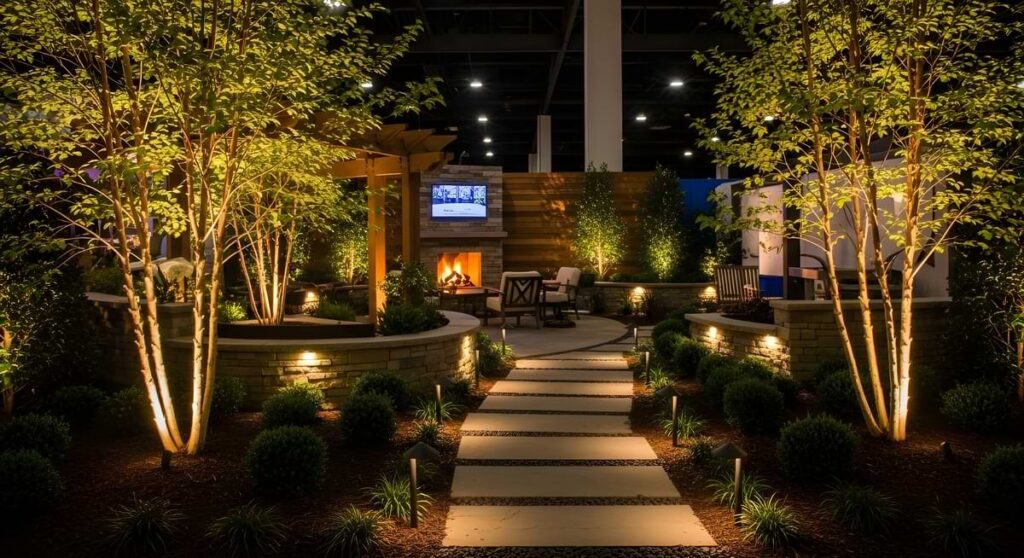
Dome Path Lights: Rounded tops direct light downward evenly, creating soft pools of illumination ideal for patios or curved pathways.
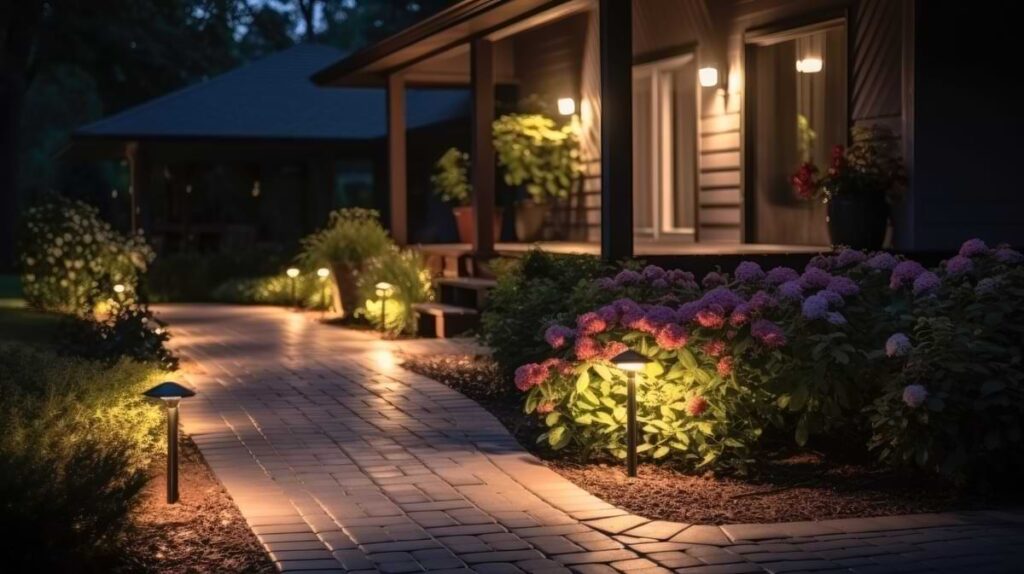
Conical Path Lights: Sleek cone-shaped fixtures focus light efficiently onto walking surfaces, blending functionality with modern design.
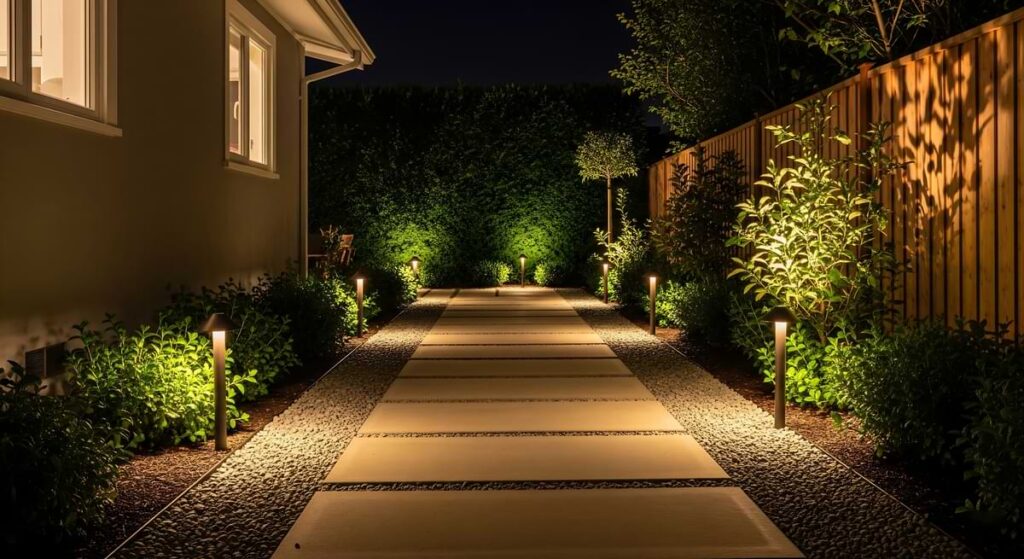
L-Shaped Path Lights: Angled fixtures cast light precisely where needed, perfect for guiding pedestrians while reducing glare.
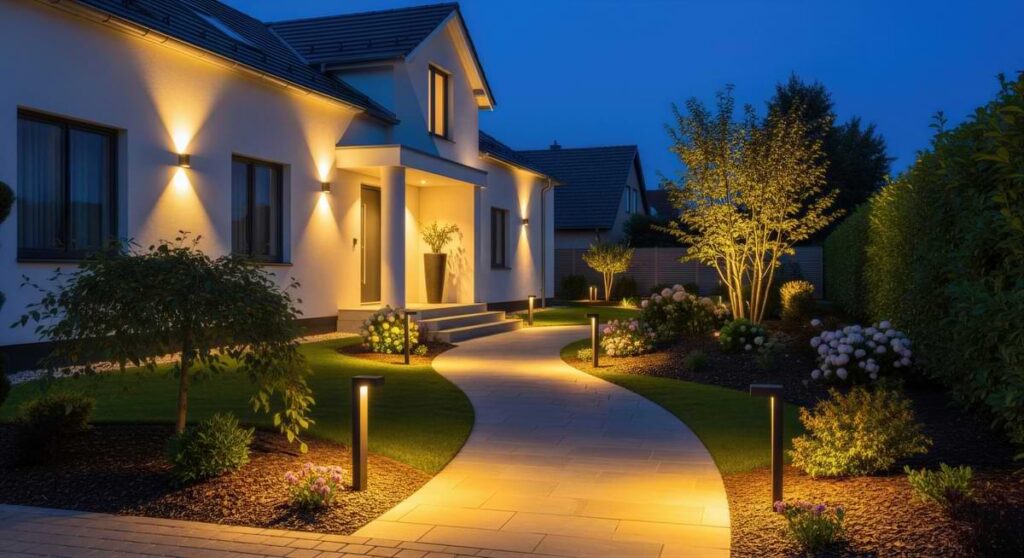
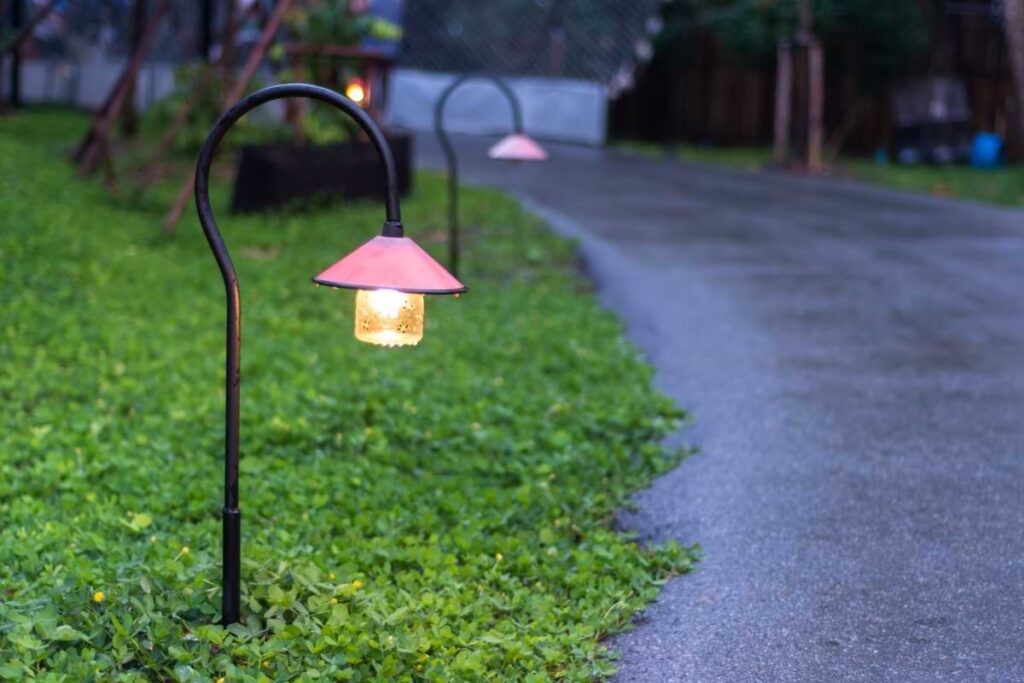
Gooseneck Path Lights: Fixtures with curved arms extend light outward over paths or garden beds, adding character and directional lighting.
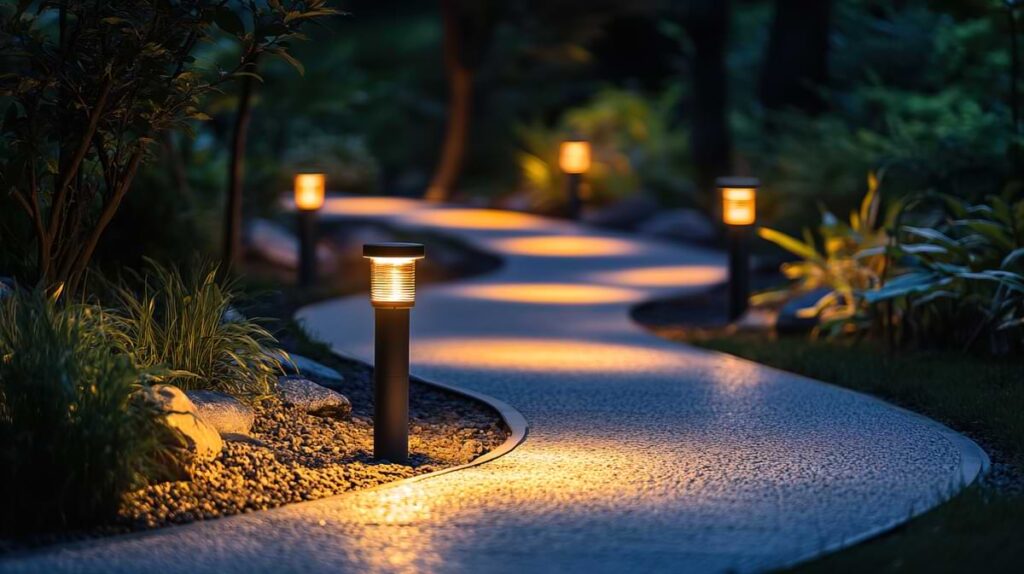
Bollard Path Lights: Short, upright posts provide bold, architectural presence while illuminating walkways and large landscape areas.
Where Path Lights Are Typically Installed
Path lights are versatile fixtures used across many landscape zones. They can transform ordinary walkways, driveways, and garden edges into well-defined, visually appealing areas. Their placement also helps prevent accidents and directs movement naturally through outdoor spaces.
- Walkways and Sidewalks: Provide safe passage between entry points, patios, and outdoor rooms.
- Driveway Edges: Define vehicle boundaries without harsh glare toward drivers.
- Garden Borders: Outline planting beds and prevent accidental foot traffic in landscaped areas.
- Steps and Transitions: Supplement step lights by illuminating surrounding walking surfaces.
Path Lights vs. Other Landscape Fixtures
Unlike uplights or flood lights, path lights focus on low-level illumination to enhance visibility and safety without overpowering the environment. This makes them ideal for layering with other fixtures to achieve a balanced, professional lighting scheme.
- Path Lights: Provide low-level, downward illumination for walking surfaces and edges.
- Spotlights and Uplights: Project focused beams upward to highlight trees, walls, or architectural features.
- Flood Lights: Cast wider, brighter light for large areas or security coverage.
- Deck and Step Lights: Integrate into structures to illuminate vertical transitions.
Choose the Right Path Lights for Effective Path Lighting
When it comes to path lights, the right fixture will withstand weather conditions while providing consistent illumination over time. Material, lumens, color temperature, and shielding should all be weighed to ensure comfort, safety, and visual appeal.
- Material Quality: Brass and copper resist corrosion and weathering better than aluminum or plastic in harsh outdoor conditions.
- Light Output: Typical path lights range from about 100–300 lumens, depending on spacing and desired brightness.
- Color Temperature: Warm white (2700–3000K) is most common for residential landscapes because it feels natural and inviting.
- Glare Control: Shielded or tiered designs improve comfort and visual quality along eye-level paths.
Path Lighting: Safety & Style for Your Outdoor Setup
For homeowners and contractors alike, path lights are one of the most common fixture types in low-voltage landscape lighting because they balance safety, aesthetics, and energy efficiency. With proper spacing, glare control, and durable materials, path lighting can guide movement while enhancing nighttime curb appeal.
Path lights also add depth and structure to outdoor spaces by defining edges and transitions. When integrated with other fixture types, they help create a balanced—and memorable—layered lighting design.
FAQs for Path Lighting
A path light is a low-profile outdoor fixture designed to illuminate walkways, driveways, or garden edges. It provides safety, guides movement, and adds subtle ambient lighting to enhance your landscape at night.
Path lights typically range from 100–300 lumens per fixture. The right brightness depends on walkway width, spacing, and desired ambiance—enough to clearly see the path without creating glare.
Pathway lights are usually spaced 6–10 feet apart. This ensures overlapping pools of light for consistent coverage, guiding pedestrians safely while creating a balanced nighttime aesthetic.