Table of Contents: Wall Wash Lighting vs. Wall Grazing Lighting
- Wall Washing vs. Wall Grazing Breakdown
- Wall Wash Lighting vs Wall Grazing Lighting: Comparison Chart
- Style Your Landscape with Wall Wash Lighting & Wall Grazing Lighting
- FAQs for Wall Wash Lighting vs. Wall Grazing Lighting
The two most common approaches to landscape lighting—wall washing and wall grazing—both create stunning results but achieve very different effects. Understanding how each one works helps you choose the right look for your outdoor space.
When it comes to landscape lighting, few techniques make as dramatic an impact as illuminating a wall. Let’s take a look at the differences between these techniques and how you can improve the look and feel of your landscape lighting.
Wall Washing vs. Wall Grazing Breakdown
When lighting outdoor walls, the placement and angle of your fixtures can completely change the look and feel of your space.
Wall washing creates a smooth, even glow that brightens large areas, while wall grazing highlights texture and depth for a more dramatic effect. Understanding the difference helps you choose the perfect lighting technique for your landscape design.
What Is Wall Washing?
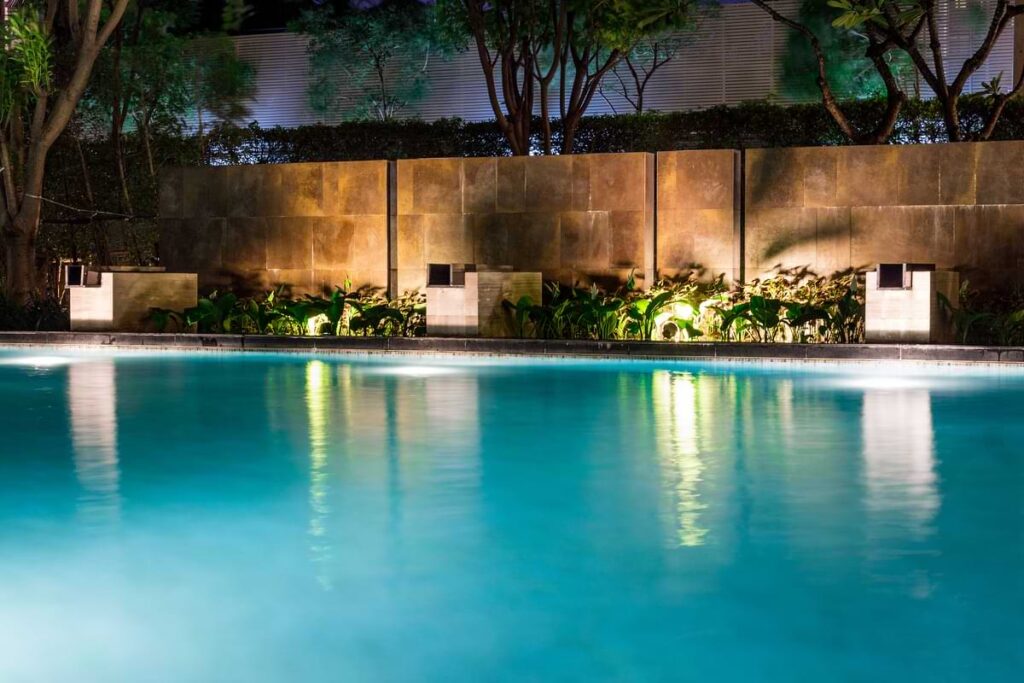
Wall washing creates a smooth, even glow across a surface by placing lights several feet away and aiming them evenly. This technique minimizes shadows and highlights the wall as a clean, continuous backdrop—ideal for brightening large outdoor areas with a refined look.
- Surface Type: Smooth or uniform materials like stucco, siding, or painted walls
- Design Style: Contemporary, minimalist, or modern outdoor spaces
- Lighting Effect: Creates a sense of openness, balance, and visual brightness
What Is Wall Grazing?
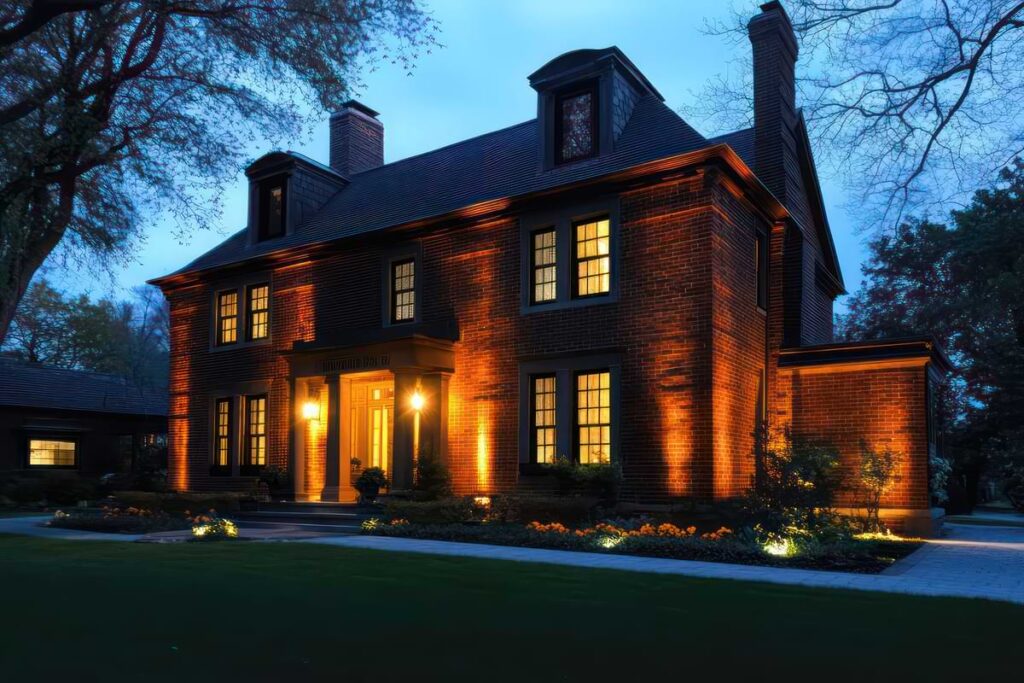
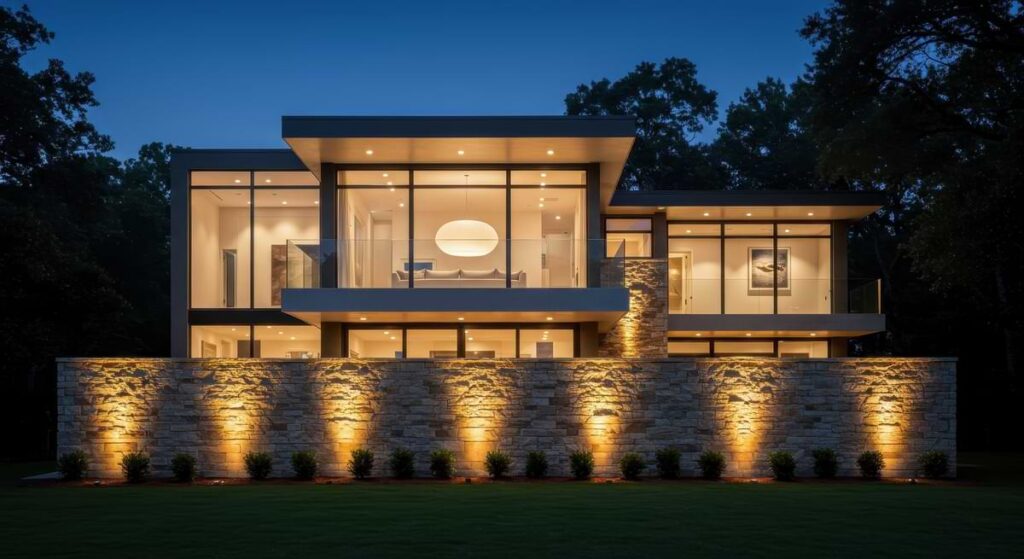
Wall grazing takes a more dramatic approach. Fixtures are installed close to the wall—usually within 6–12 inches—and angled sharply to emphasize texture.
The result is a play of light and shadow that reveals every contour, giving the surface depth and character.
- Surface Type: Rough or textured finishes such as stone, brick, wood, or concrete
- Design Style: Rustic, artistic, or architectural designs that highlight materials
- Lighting Effect: Adds drama, dimension, and emphasis to detailed wall surfaces
Wall Wash Lighting vs Wall Grazing Lighting: Comparison Chart
Both wall washing and wall grazing can completely transform your outdoor space, but they create very different visual effects. Use the guide below to see which technique best fits your lighting design goals.
| Feature | Wall Washing | Wall Grazing |
| Lighting Effect | Soft, even illumination that brightens surfaces | Dramatic contrast that highlights texture and depth |
| Fixture Placement | Several feet away from the wall with wide-beam floodlights | Within 6–12 inches of the wall, angled sharply upward or downward |
| Best For | Smooth, uniform surfaces like stucco, siding, or painted walls | Rough, textured materials like stone, brick, or wood |
| Design Style | Modern, minimalist, and open | Rustic, artistic, and architectural |
| Overall Impression | Clean, bright, and inviting | Bold, dimensional, and expressive |
Style Your Landscape with Wall Wash Lighting & Wall Grazing Lighting
Wall washing and wall grazing are two sides of the same artistic coin. One smooths, the other sharpens—but both can transform an ordinary wall into a stunning nighttime centerpiece.
Whether you’re designing a serene garden or a striking modern patio, the right lighting technique will make your architecture shine long after sunset.
FAQs for Wall Wash Lighting vs. Wall Grazing Lighting
Wall wash lighting evenly illuminates a surface by placing fixtures a few feet away and aiming them across the wall. This technique minimizes shadows and creates a smooth, bright backdrop that enhances the sense of space and cleanliness.
A wall washer spreads light evenly to soften surfaces, while a wall grazer positions light close to the wall to emphasize texture and detail. Wall washing highlights smooth finishes, and wall grazing draws out depth and character in rough or patterned materials.
Wall washing lights large surfaces for a uniform glow, while accent lighting focuses on specific features like sculptures, plants, or architectural elements. Wall washing sets the overall tone, and accent lighting adds focal points and contrast.
Join our Insider list and check out the different lighting options that we have to offer.