Table of Contents: What’s the Difference Between RGB Lighting & Color Filters for Outdoor Lighting?
- What Are Landscape Light Color Filters?
- What Is RGB Landscape Lighting?
- Landscape Light Color Filters vs. RGB Landscape Lighting: Which Option Should You Choose?
- Landscape Light Color Filters vs. RGB Landscape Lighting: The Best Option for Your Outdoor Space
- FAQs for Landscape Light Color Filters
Landscape light color filters are just one of the ways homeowners can bring more than warm white illumination to their outdoor spaces. When most people think about landscape lighting, they picture soft, neutral accent lights highlighting trees, pathways, and architectural features—but color plays a much bigger role than simply setting the mood.
Seasonal décor, holiday themes, poolside ambiance, and evening entertaining all benefit from intentional color choices. And there are two primary ways to achieve those effects outdoors: traditional color filters and modern RGB lighting. Each approach offers unique advantages depending on your setup, goals, and budget.
What Are Landscape Light Color Filters?
Color filters are physical lenses or gels placed over a standard fixture to alter the hue of the light output. They’re typically used with MR16 lamps, PAR lamps, or certain spotlights and in-ground fixtures.
Advantages of Landscape Light Color Filters
Filters are especially popular for subtle seasonal accents—think amber for fall, green for St. Patrick’s Day, or soft pinks and reds for roses or crepe myrtles. Because the filtered light remains focused, it preserves contrast and shadow, maintaining the natural look of the landscape.
Filters don’t change color on demand, so you need to swap them manually. They also slightly reduce total lumen output, since some of the light is absorbed by the filter.
Advantages of color filters include:
- Affordability: Filters offer a low-cost entry point for experimenting with color.
- Targeted Color: Filters produce a consistent, saturated hue without needing app controls or extra wiring.
- Reliability & Low-Tech: Great for installations where you want a set-and-forget color treatment.
What Is RGB Landscape Lighting?
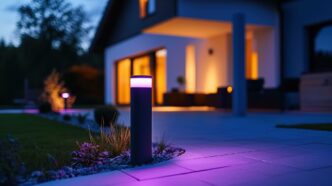
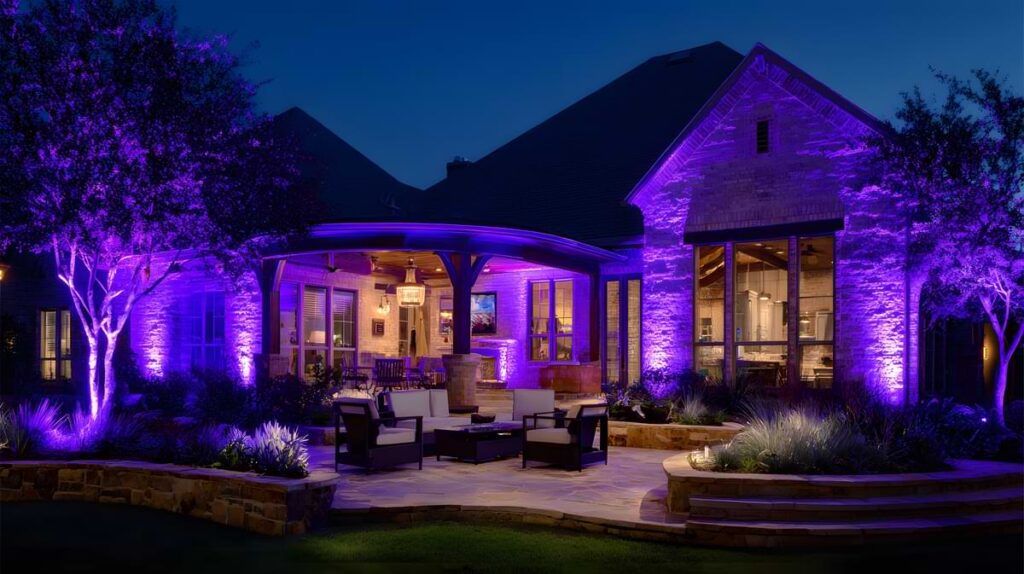
RGB lighting uses a combination of Red, Green, and Blue LEDs within a lamp or fixture to produce a wide spectrum of colors—including dynamic scenes and multicolor transitions—all controlled digitally.
Advantages of RGB Lighting
High-end RGB systems even include RGBW or RGBA configurations for richer whites and smoother blends, making them popular with both homeowners and lighting designers.
RGB fixtures and drivers cost more upfront and may require dedicated controls or transformers depending on the brand. Some homeowners also prefer the simplicity and purity of traditional warm white lighting and only want color occasionally.
Advantages of RGB lighting include:
- Unlimited Colors: Switch from warm white to festive holiday hues instantly.
- App Control & Automation: Many systems offer scheduling, dimming, grouping, and scenes directly from your phone.
- Dynamic Effects: Perfect for events, pool areas, patios, and modern outdoor entertaining spaces.
Landscape Light Color Filters vs. RGB Lighting: Which Option Should You Choose?
To help you decide which option makes the most sense for your project, here’s a quick side-by-side comparison of landscape color filters versus RGB lighting.
| Category | Color Filters | RGB Lighting |
| Best For | Seasonal, decorative, or temporary color | Dynamic, everyday, or event-based color |
| Color Changes | Manual (swap filters) | Digital (app/remote controlled) |
| Flexibility | Limited to one color per filter | Wide spectrum + scenes + effects |
| Installation Complexity | Very simple | Moderate to advanced depending on system |
| Upfront Cost | Low | Higher |
| Ideal Use Cases | Holiday accents, highlighting plants/architecture, subtle color | Parties, holidays, entertaining, pool/patio ambiance, year-round creativity |
| Maintenance | Occasional swapping | Software updates + system adjustments |
| Everyday Use | Usually off or warm white | Can switch between white + color on demand |
| Ecosystem/Controls | None required | Usually requires app, controller, or transformer |
| Overall Experience | Practical + budget-friendly | Premium + automated + highly versatile |
Landscape Light Color Filters vs. RGB Landscape Lighting: The Best Option for Your Outdoor Space
Filters are about simplicity and cost. RGB is about control and creativity. Both can be used beautifully—sometimes even together—to enhance your outdoor spaces and bring your landscape to life with color.
FAQs for Landscape Light Color Filters
Light can be filtered using colored gels, lenses, or covers placed over your fixtures. These physical filters selectively block certain wavelengths of light, allowing only the desired color to shine through. They’re easy to install on MR16, PAR, or in-ground fixtures, giving you a simple way to add seasonal, decorative, or accent colors to your landscape without altering the lamp itself.
Color filters change the hue of the light emitted by a fixture, producing a vibrant or subtle tone depending on the material and thickness of the filter. While they transform the color, filters can slightly reduce the overall brightness because some light is absorbed by the material. This trade-off is generally minimal and often adds a richer, more focused visual effect to trees, pathways, and architectural features.
The “best” color depends on your goals and the atmosphere you want to create. Warm white (2700K–3000K) is most popular for general illumination because it enhances natural textures and creates a welcoming glow. For seasonal accents or special events, colors like amber, red, green, or blue can highlight foliage, architectural elements, or festive décor. Filters let you experiment affordably, while RGB lighting allows for endless color possibilities and dynamic scenes.
Join our Insider list and check out the different lighting options that we have to offer.