Table of Contents: Outdoor Statue Lighting Guide
- Why Statue Lighting Matters
- Select the Ideal Statute Lighting Technique
- More Practical Considerations for Statue Lighting
- Make Your Artwork Shine with Statue Lighting
- FAQs for Statue Lighting
Statue lighting brings personality and intention to an outdoor space, ensuring sculptures and decorative features maintain their impact after sunset. It is the art of using landscape lighting techniques to highlight statues, monuments, and other focal points so they remain captivating day and night.
Done right, statue lighting adds drama, depth, and elegance to your yard without overpowering the surrounding landscape.
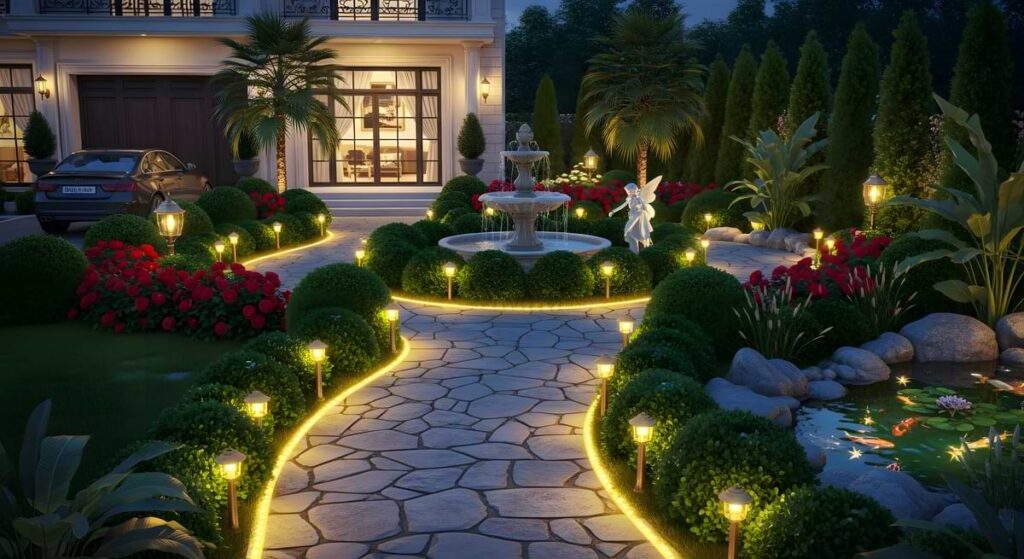
Why Statue Lighting Matters
Statues are often emotional or symbolic elements in a landscape—memorials, religious figures, garden art, or statement pieces. Lighting them serves two purposes: visibility and storytelling, revealing textures, contours, and expressions that daylight alone can’t fully capture.
Thoughtful illumination also guides the eye, creating visual anchors that make your outdoor space feel intentional and complete after dark.
- Avoid Flat Lighting: Avoid lighting the statue from straight-on at eye level, as it flattens detail and reduces visual impact.
- Test at Night: Test lighting at night before final installation, as small adjustments can make a dramatic difference in appearance.
- Use Glare Shields: Use glare shields or shrouds to keep light out of viewers’ eyes and maintain focus on the statue.
- Layer Your Lighting: Think in layers by ensuring statue lighting complements path lights, tree lights, and architectural features.
Select the Ideal Statute Lighting Technique
Not all statues are the same, and neither should their lighting be. The way a sculpture is illuminated can completely change how it’s perceived, emphasizing texture, form, or mood.
Choosing the right technique ensures your statue becomes a captivating focal point, whether you want dramatic impact, subtle ambiance, or elegant highlighting of intricate details.
Uplighting: Ground-Level Illumination
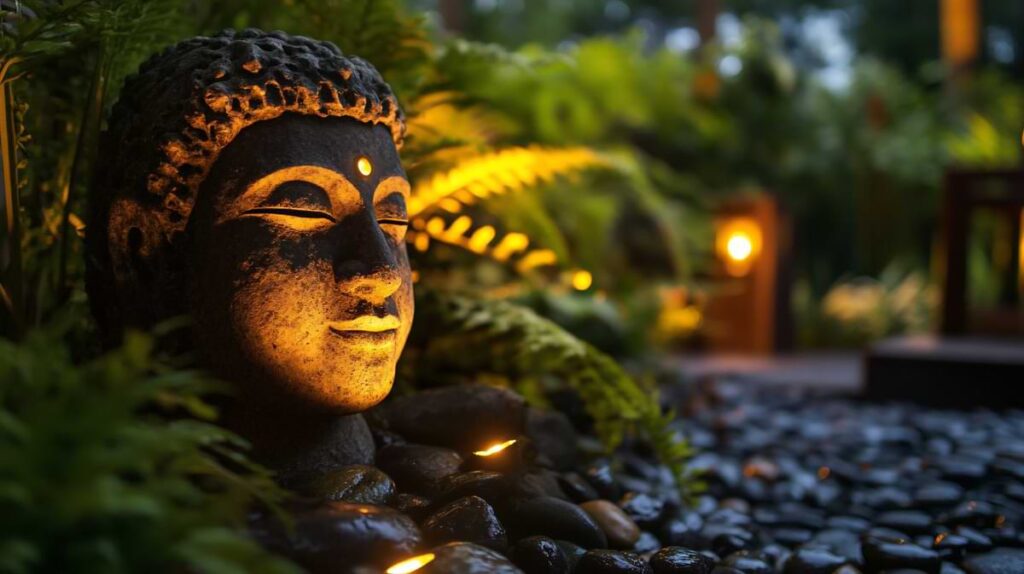
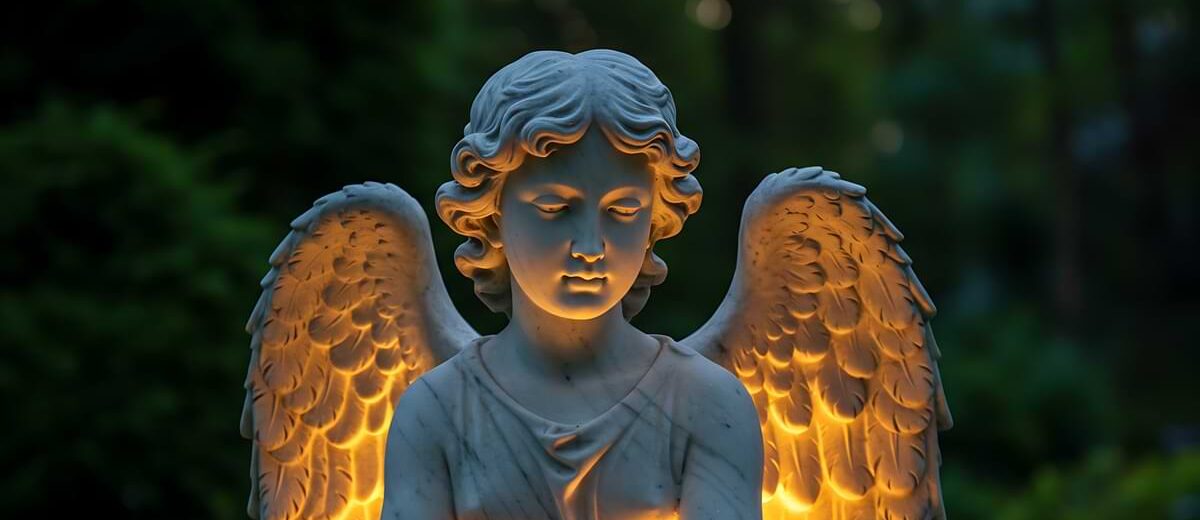
Uplighting is the most common and versatile method for statue lighting. It emphasizes height, form, and texture, making statues stand out in any landscape. This method draws the eye upward, creating a sense of grandeur and importance that makes the sculpture a nighttime focal point.
- Enhance Height: Uplights are placed at ground level and angled upward to make statues appear taller and more prominent.
- Highlight Texture: This technique reveals intricate carvings and surface details that may be lost in natural shadows.
- Focus Vertical Features: Works especially well for statues with strong vertical lines or slender silhouettes.
Cross-Lighting: Multi-Angle Illumination
Cross-lighting uses two or more fixtures from different angles to evenly illuminate a statue. It reduces harsh shadows and ensures that every detail is visible at night. By lighting from multiple directions, cross-lighting adds dimensionality and balance, making the statue look more lifelike and engaging.
- Reduce Shadows: Position lights on opposite sides to minimize dark areas on the statue.
- Reveal Intricacies: Ideal for statues with complex features or detailed faces that require even illumination.
- Add Depth: Creates a three-dimensional effect that enhances the statue’s presence in the landscape.
Silhouetting: Backlighting for Dramatic Effect
Silhouetting is a dramatic technique for modern or bold looks, placing lights behind the statue to cast a striking outline. This approach emphasizes form over detail, creating a powerful visual statement that works well in contemporary or minimalist garden designs.
- Create Drama: Backlighting produces a distinct silhouette that stands out against walls or hedges.
- Focus on Shape: Highlights the statue’s outline rather than surface details for a contemporary effect.
- Control Visibility: Keeps the statue mostly dark while emphasizing its form and surrounding features.
Downlighting: Overhead Moonlight Effect
Downlighting mimics natural moonlight, casting light from above to create a subtle, atmospheric effect. It offers a soft, gentle illumination that enhances the sculpture’s features while blending harmoniously with trees, pergolas, or architectural elements overhead.
- Simulate Moonlight: Lights are positioned above the statue, under trees, pergolas, or overhangs for a natural glow.
- Blend with Landscape: Integrates seamlessly into surrounding lighting layers without overpowering other elements.
- Highlight Features Softly: Provides gentle illumination that emphasizes the statue without harsh shadows.
More Practical Considerations for Statue Lighting
Effective statue lighting balances placement, beam spread, color, and brightness to make your sculpture a nighttime focal point and enhance its textures, details, and overall mood.
Even small adjustments can dramatically change how the statue interacts with surrounding plants, paths, and architectural features, so breaking these elements into practical considerations is key.
Place Fixtures and Control Beam Spread
Where and how you place your lights can make or break a statue lighting design. Proper placement ensures the sculpture is showcased effectively, while the right beam spread highlights details without causing glare or harsh shadows.
- Position Properly: Set lights 12–24 inches from the statue base to balance focus and avoid glare.
- Adjust Beam Width: Narrow beams accentuate tall, slim statues, while wide beams suit broader or multi-dimensional pieces.
- Use Adjustable Fixtures: Allows fine-tuning over time as plants grow or landscape elements change.
Choose Color and Control Brightness
The color and intensity of light dramatically influence how a statue looks at night. Choosing the right temperature and brightness ensures the sculpture feels natural, inviting, and visually balanced within the overall landscape.
- Choose Warm Tones: Warm white light (2700K–3000K) complements natural stone, bronze, and other materials.
- Avoid Harsh Colors: Cooler tones can appear stark unless a modern or artistic effect is intended.
- Control Brightness: Keep lighting slightly dimmer than surrounding architectural lights to make the statue stand out without overwhelming the yard.
Make Your Artwork Shine with Statue Lighting
When done with intention, statue lighting transforms garden art into a nighttime centerpiece—one that adds meaning, atmosphere, and visual depth long after the sun goes down.
With thoughtful placement, the right technique, and careful attention to color and brightness, your sculpture can become a captivating focal point that elevates your entire landscape.
FAQs for Statue Lighting
Sculptural lighting is the practice of using strategically placed lights to highlight statues, monuments, or garden art, emphasizing their form, texture, and presence in a landscape.
The best lighting depends on the statue’s size, material, and setting, but uplighting, cross-lighting, downlighting, or silhouetting with warm, adjustable fixtures typically produces the most striking results.
To illuminate a statue effectively, position lights carefully, choose the right beam spread, adjust brightness and color temperature, and test at night to enhance details while complementing surrounding landscape features.
Join our Insider list and check out the different lighting options that we have to offer.