Table of Contents: 6 Gate Lighting Ideas for Landscape Lighting
- How to Create Gate Entrance Lighting in 6 Steps
- Gate Entrance Lighting: Make a Lasting First Impression
- FAQs for Gate Entrance Lighting
Gate entrance lighting does more than mark a boundary—it sets the tone for everything beyond it. Whether you’re lighting a residential driveway gate, a garden entry gate, or a commercial access point, well-thought out lighting improves visibility, reinforces security, and creates a welcoming first impression after dark.
How to Create Gate Entrance Lighting in 6 Steps
Thoughtful gate entrance lighting blends function and design, safely guiding visitors while highlighting architectural details and landscape features without overpowering the space.
Below are practical, design-forward tips to help you light gate entrances with intention.
1. Prioritize Safety and Visibility
A gate should be easy for visitors to see, operate, and pass through at night, especially for vehicles and guests unfamiliar with the property. Proper lighting helps prevent hesitation, missteps, and accidental damage while making the entering the gate feel intuitive.
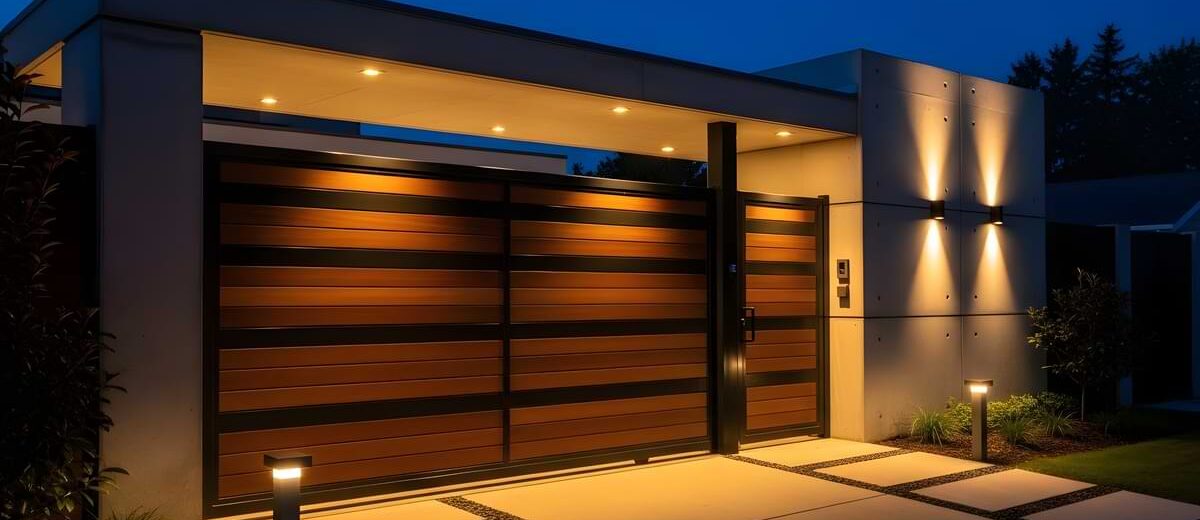
- Illuminate Access Points: Install compact wall lights, post-mounted fixtures, or directional spotlights aimed at gate handles, keypads, intercoms, and latches so they’re easy to see and use after sunset without creating glare.
- Guide Movement: Use unobtrusive well lights near gates or stagger wide-brim “mushroom” pathway lights along driveways and walkways to create even, glare-free illumination that emphasizes safe movement, rather than narrow-beam or conical path lights that produce isolated pools of light.
- Reduce Glare: Choose shielded or downward-facing fixtures to prevent harsh light from shining into eyes or vehicle windshields.
2. Enhance Security Without Overlighting
Gate lighting plays an important role in security, but more light isn’t always better. Strategic placement and controlled brightness are more effective than flooding the area with harsh illumination.
- Define Boundaries: Use post-mounted lights on gate columns, wall-mounted sconces on adjacent walls, or low-profile wash lights and accent lights along fencing to clearly define entry points, discourage unwanted access, and maintain consistent perimeter visibility.
- Eliminate Dark Pockets: Use overlapping light coverage by spacing fixtures so their light patterns intersect, such as pairing path or post lights with nearby wall lights or soft accent lights, to minimize shadows and ensure continuous visibility around the gate area.
- Support Surveillance: Use shielded, low-glare fixtures positioned slightly off-axis from security cameras—such as wall-mounted downlights or soft area lights—to provide even illumination across the gate without shining directly into the lens or washing out details of the people and vehicles in view.
3. Highlight Architectural Features
A gate is often a focal point, especially when it includes custom materials or decorative details. Well-placed lighting can elevate these features and turn a functional entry into a visual statement.
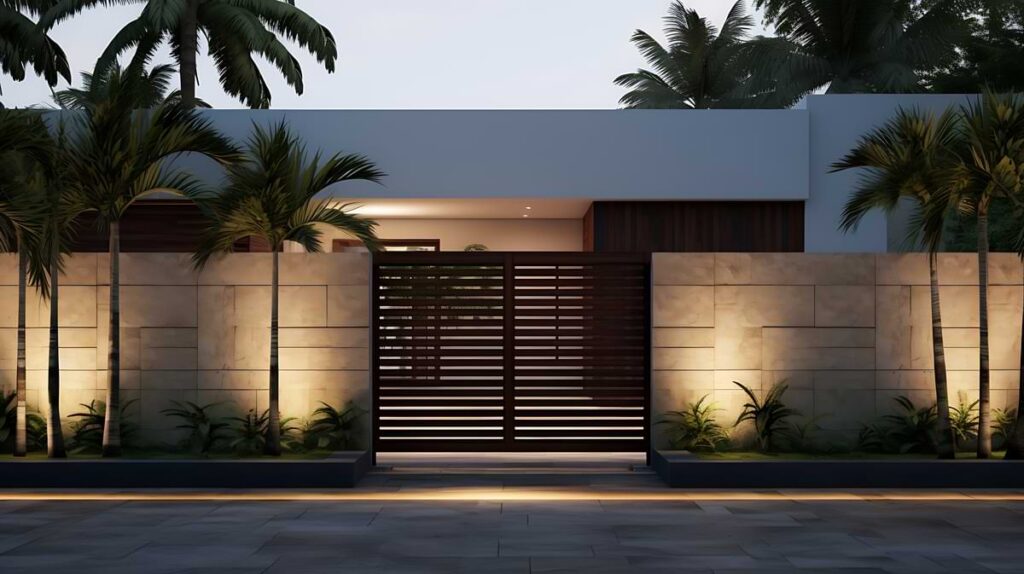
- Accent Materials: Use uplighting or grazing to emphasize stone columns, metalwork, wood textures, or signage.
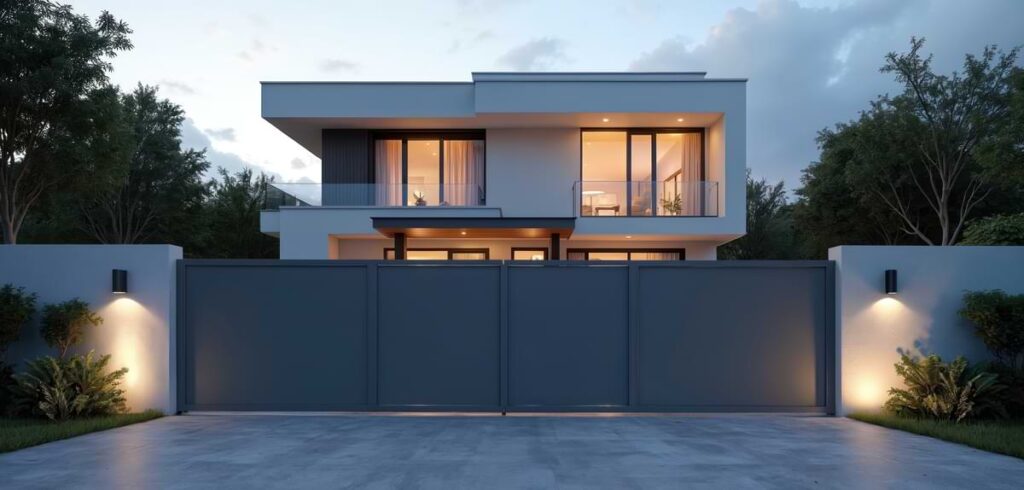
- Frame the Entry: Position matching wall-mounted sconces, column lights, or softly aimed accent lights symmetrically on either side of the gate to create visual balance and highlight the entrance without overpowering it.
- Add Depth: Layer accent lighting with softer ambient light to avoid a flat, overly bright appearance.
4. Choose Fixtures Built for the Outdoors
Gate entrances are exposed to weather, dust, and frequent use, so durability matters. Fixtures designed for outdoor environments ensure reliable performance and a consistent look year after year.
- Select Weather-Rated Fixtures: Look for outdoor-rated lights with appropriate IP ratings to handle rain, dirt, and temperature changes.
- Match the Style: Choose fixture finishes and designs that complement the gate and surrounding architecture.
- Plan for Longevity: Opt for LED fixtures to reduce maintenance and ensure consistent performance over time.
5. Control Light With Smart Placement
Where you place lights is just as important as which fixtures you choose. Thoughtful positioning keeps light focused where it’s needed while minimizing spill and distraction.
- Position With Purpose: Use directional spotlights, uplights, or narrow-beam accent fixtures aimed directly at gate posts, panels, or decorative details to focus attention on features of the gate itself.
- Control Brightness: Choose 300–500 lumen fixtures with beam angles between 15–30° to provide subtle, focused illumination that highlights the entrance without spilling onto the street or neighboring properties.
- Use Angles Wisely: Adjust beam angles to create even coverage across the entrance without hot spots.
- Coordinate Controls: Consider timers, photocells, or smart controls so gate lighting automatically turns on at dusk and adjusts seasonally.
6. Create a Cohesive Vibe
Gate entrance lighting should feel like a natural extension of the rest of the landscape lighting design. When the entrance lighting aligns with the broader system, the entire property feels more polished and intentional.
- Maintain Consistency: Match color temperature and brightness levels with nearby pathway, driveway, and architectural lights.
- Layer the Experience: Combine functional lighting with subtle accents to make the entrance feel intentional and inviting.
- Think Beyond the Gate: Extend your lighting scheme from the gate into the driveway, walkways, or nearby landscaping using low-level path lights, uplights on trees, or subtle wall washes. This creates a visual connection to the home, safely guides visitors, and maintains a cohesive look throughout the property.
Gate Entrance Lighting: Make a Lasting First Impression
When done right, gate entrance lighting does more than light the way—it establishes presence, improves safety, and elevates the entire property from the very first glance. It creates a clear sense of arrival while comfortably guiding guests and confidently onto the property.
With the right balance of function and design, gate lighting becomes a lasting first impression that works just as hard as it looks.
FAQs for Gate Entrance Lighting
The best type of lighting for a gate entrance balances visibility, security, and aesthetics. LED fixtures are ideal because they are energy-efficient, long-lasting, and available in a variety of styles to match your gate and landscape. Uplights, downlights, and post-mounted lights are popular choices depending on whether you want to highlight architectural details, illuminate pathways, or provide general visibility.
To enhance security, focus on strategic placement rather than excessive brightness. Lights should clearly define the entry point, illuminate handles or keypads, and minimize shadows where someone could hide. Combining functional lighting with motion sensors or timed controls ensures the gate is well-lit when needed without disturbing neighbors or creating glare.
Absolutely. Gate lighting can serve both functional and decorative purposes. By matching the style, finish, and color temperature of your fixtures with surrounding pathways, driveways, and architectural elements, you create a cohesive look. Layering ambient, accent, and task lighting around the gate enhances visual appeal while maintaining a welcoming, well-designed entrance.
Join our Insider list and check out the different lighting options that we have to offer.