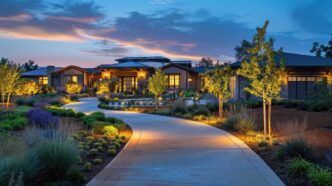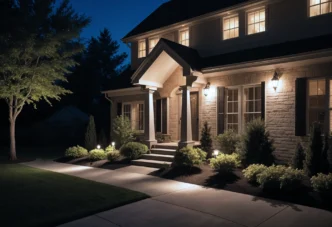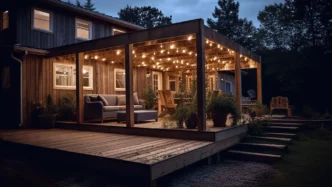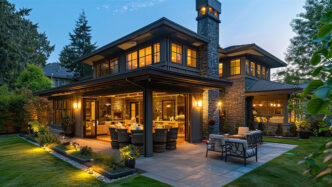
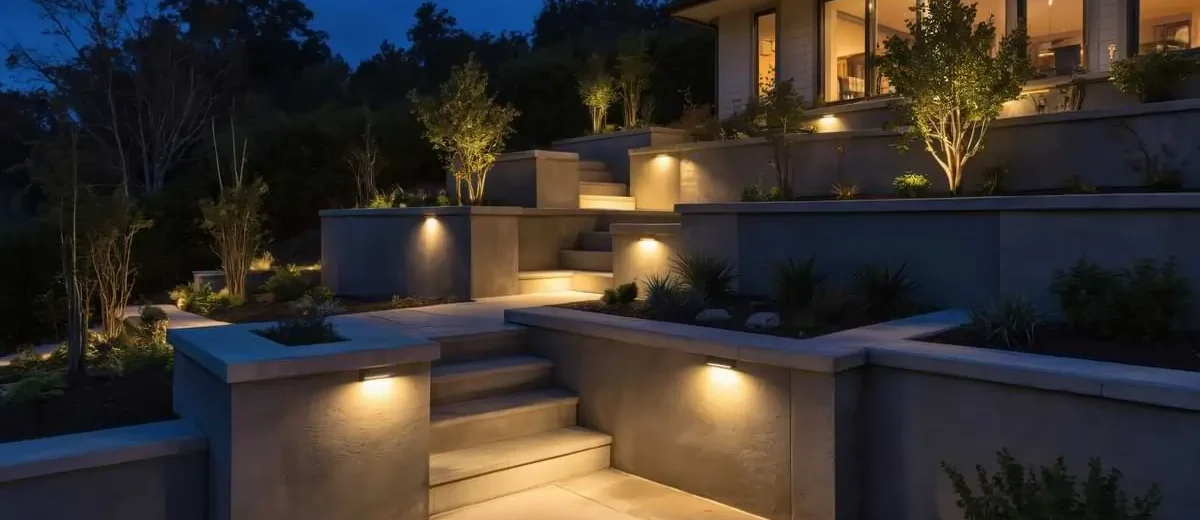
Hardscape lighting ideas can turn a simple patio, retaining wall, or set of steps into a welcoming outdoor space after sunset.
Soft illumination along stone, brick, and other hardscape features adds depth and definition, helping your landscape feel just as intentional at night as it does during the day.
How to Plan Your Hardscape Lighting Design
Before choosing fixtures, start by looking at the hardscape features you want to highlight and how you use the space after dark. From there, you can build a lighting plan that balances visibility, atmosphere, and architectural detail.
1: Check Your Hardscape Features
To start, identify the features that already give your outdoor space its character. Look for the areas where a little illumination can make those details stand out.
- Walkways and Steps: Mark paths, stairs, and changes in elevation where path lights or step lights can improve visibility after dark.
- Walls and Edges: Note retaining walls, seating walls, and raised garden borders that could benefit from wall lights or under-cap lights.
- Gathering Areas: Identify patios, outdoor kitchens, and seating areas where accent lights or low-profile hardscape fixtures can make the space more comfortable to use.
2: Highlight Walls and Edges
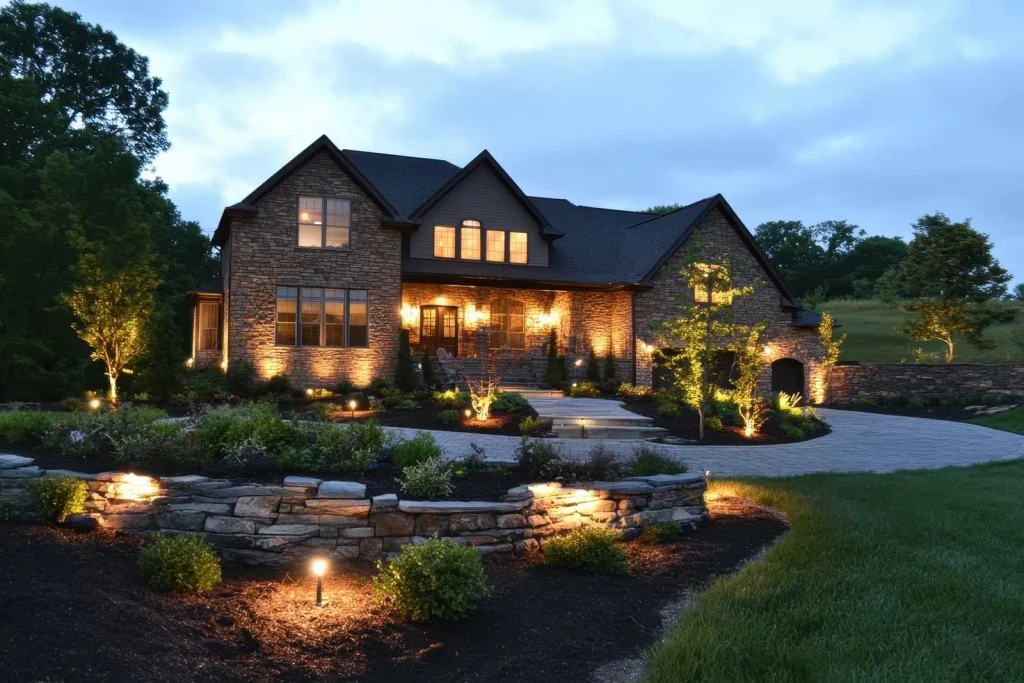
Now that you know which features deserve attention, start with the hardscape elements that create structure throughout the landscape. Strategic hardscape LED lighting can bring out texture while giving walls and borders more visual depth.
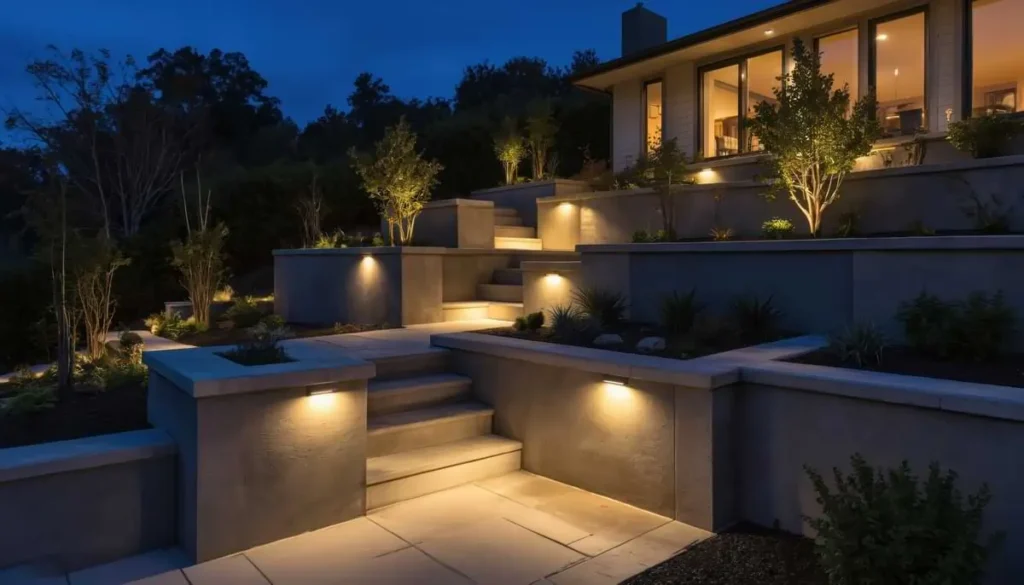
- Wall Lighting: Place wall lights beneath or along seating and retaining walls to create a soft wash of light.
- Edge Lighting: Use low-profile fixtures, such as under-cap lights, to define borders without overpowering nearby plants or architectural features.
- Texture: Position accent lights to emphasize stone, brick, or other textured surfaces and create subtle shadows.
3: Add Hardscape Step Lights
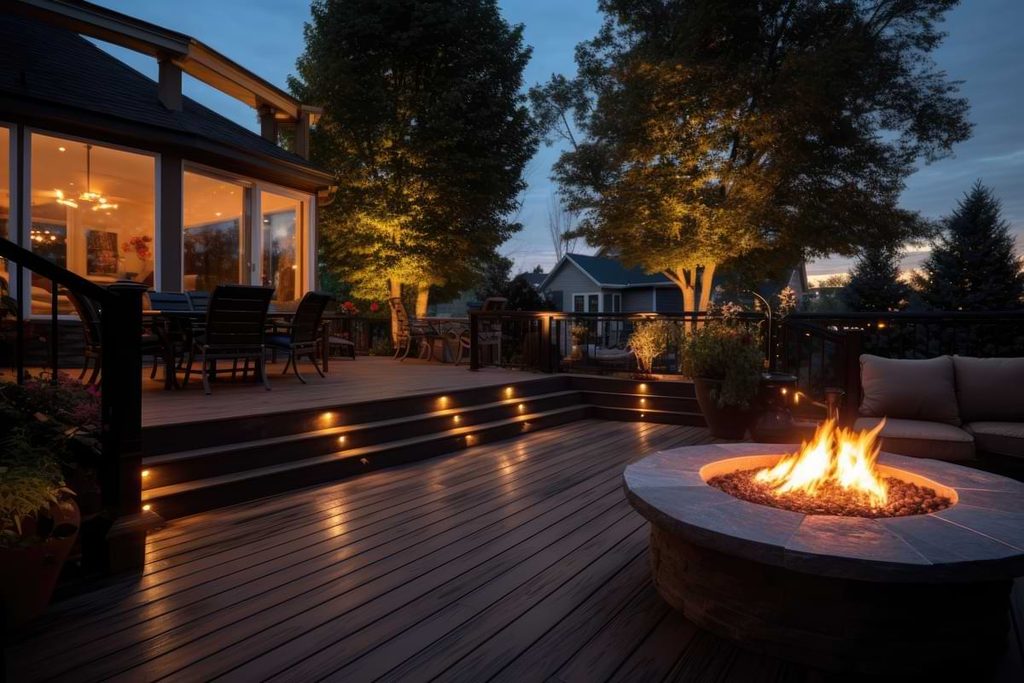
With the larger features illuminated, turn your attention to transitions and elevation changes. Hardscape step lights can make stairs easier to navigate while adding another layer of visual interest.
- Step Visibility: Install step lights where they clearly illuminate each tread without creating harsh glare.
- Wall Integration: Recess or mount fixtures into stair risers, retaining walls, or nearby structures for a streamlined appearance.
- Consistent Spacing: Keep fixtures evenly distributed so the steps have balanced illumination from top to bottom.
4: Create a Layered Look
At this point, your main hardscape features are visible, so you can refine the overall effect. Combining different applications keeps the lighting from feeling flat and helps guide attention through the landscape.
- Mix Fixtures: Combine wall lights, step lights, path lights, and accent lights where appropriate to illuminate different features.
- Vary Brightness: Use stronger illumination where visibility matters and softer light from accent or under-cap fixtures for decorative areas.
- Avoid Overlighting: Leave some areas darker so illuminated features have contrast and dimension.
5: Match Lighting to the Space
Your final step is making sure every fixture feels like part of the landscape rather than an addition competing for attention. Consider the materials, layout, and way you use the space to create a cohesive nighttime design.
- Match Materials: Choose fixture finishes that complement nearby stone, brick, concrete, or other hardscape materials.
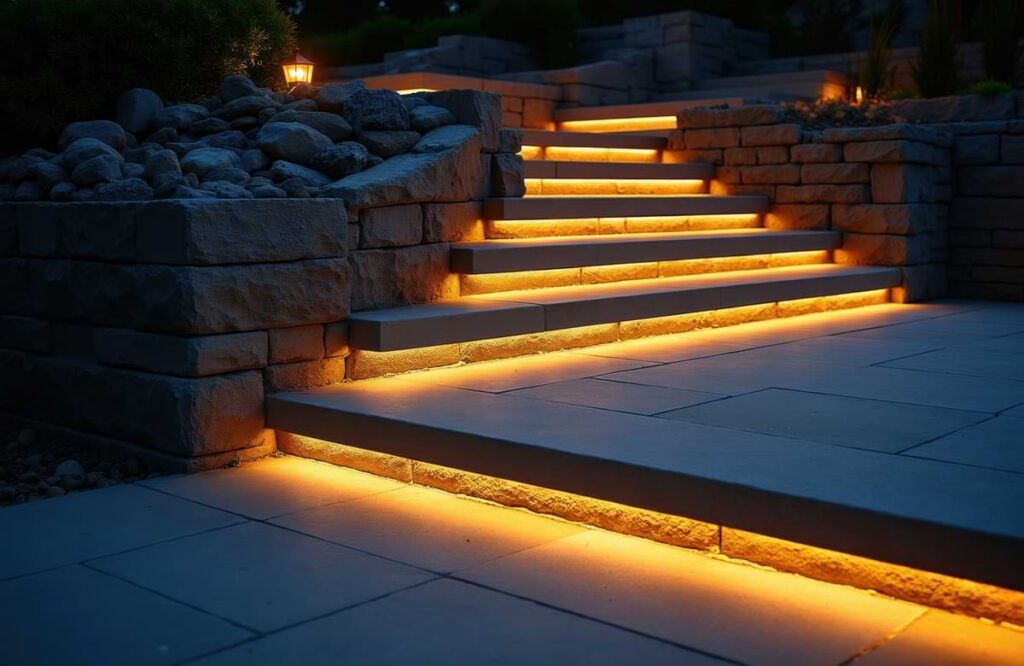
- Follow Architecture: Position wall lights, under-cap lights, or other low-profile fixtures to reinforce the lines and shapes already present in the outdoor space. You can also tuck led tape lights, also called strip lights, under outdoor step treads for a more contemporary vibe.
- Consider Use: Prioritize brighter step lights and path lights around stairs and active areas while keeping decorative accent lighting more subtle.
Compare Hardscape Lighting Applications
Now that you’ve seen how the lighting can come together, use this quick comparison to match each application with the effect you want. The right combination depends on whether your priority is safety, architectural detail, ambiance, or a little of all three.
| Hardscape Lighting Application | Best For | Lighting Effect |
| Step Lights | Stairs and elevation changes | Improves visibility and defines each step |
| Wall Lights | Retaining and seating walls | Highlights texture and adds depth |
| Strip Lights | Steps, walkways, and borders | Offers a linear, modern approach to step lighting when tucked under step treads |
| Accent Lights | Stonework and architectural details | Draws attention to specific features |
| Under-Cap Lights | Walls, benches, and ledges | Creates a subtle downward glow |
Bring Your Hardscape to Life at Night with Hardscape LED Lighting
Once the fixtures are selected and positioned, step back and evaluate the entire space after dark.
Good hardscape lighting should make the landscape easier to navigate while revealing textures, edges, and architectural details that might otherwise disappear at night.
FAQs for Hardscape Lighting Ideas
Hardscape lighting is outdoor lighting designed to illuminate built landscape features such as retaining walls, patios, steps, walkways, and seating walls. It can improve visibility while highlighting the texture, shape, and architectural details of your outdoor space.
The rule of thumb for outdoor hardscape lighting is to use enough light for safe visibility without creating glare or over-lighting the space. Focus fixtures on key features and transitions, then layer brighter task lighting with softer accent lighting for a balanced look.
Current outdoor hardscape lighting trends favor low-profile fixtures, integrated step lights, warm color temperatures, and layered illumination. Designers are also using subtle lighting to highlight natural stone, retaining walls, pathways, and other architectural features rather than flooding the entire landscape with light.
Join our Insider list and check out the different lighting options that we have to offer.