Table of Contents: Designing an Outdoor Kitchen
- How to Design an Outdoor Kitchen in 4 Easy Steps
- Design an Outdoor Kitchen: Bringing It All Together
- FAQs for Design an Outdoor Kitchen
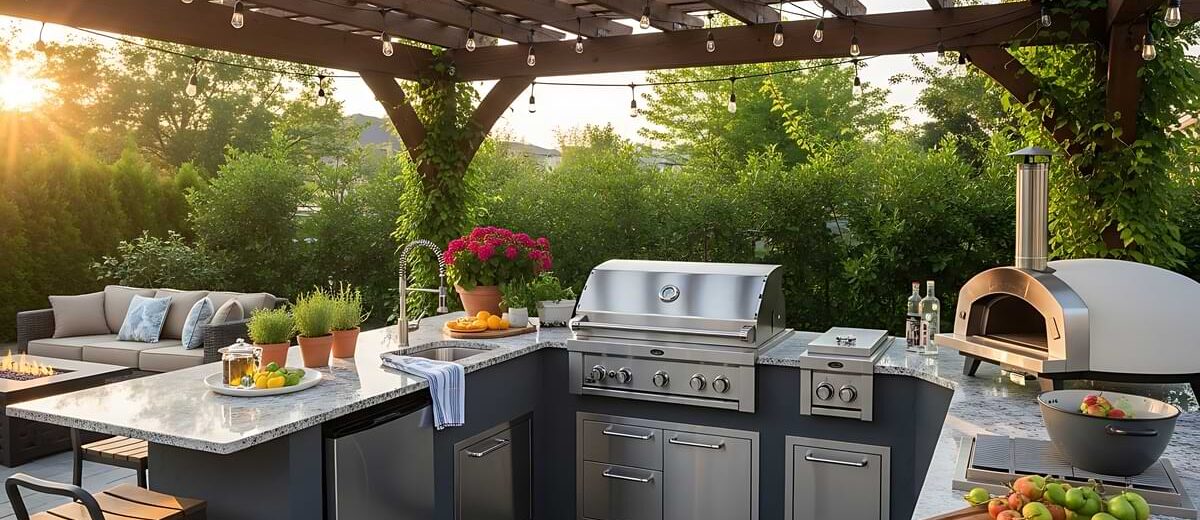
Designing an outdoor kitchen is about more than trends—they are a natural extension of your living space. Whether you are grilling for a crowd or enjoying a quiet evening outside, the right outdoor kitchen equipment setup blends function with style.
In this guide, we will break down how to design an outdoor kitchen with smart layout ideas, durable materials, and long-term performance in mind.

How to Design an Outdoor Kitchen in 4 Easy Steps
Creating a functional and stylish outdoor kitchen comes down to a few smart decisions upfront. These outdoor kitchen design tips focus on layout, materials, and flow so your space works as good as it looks.
1: Design Layout Ideas That Maximize Flow
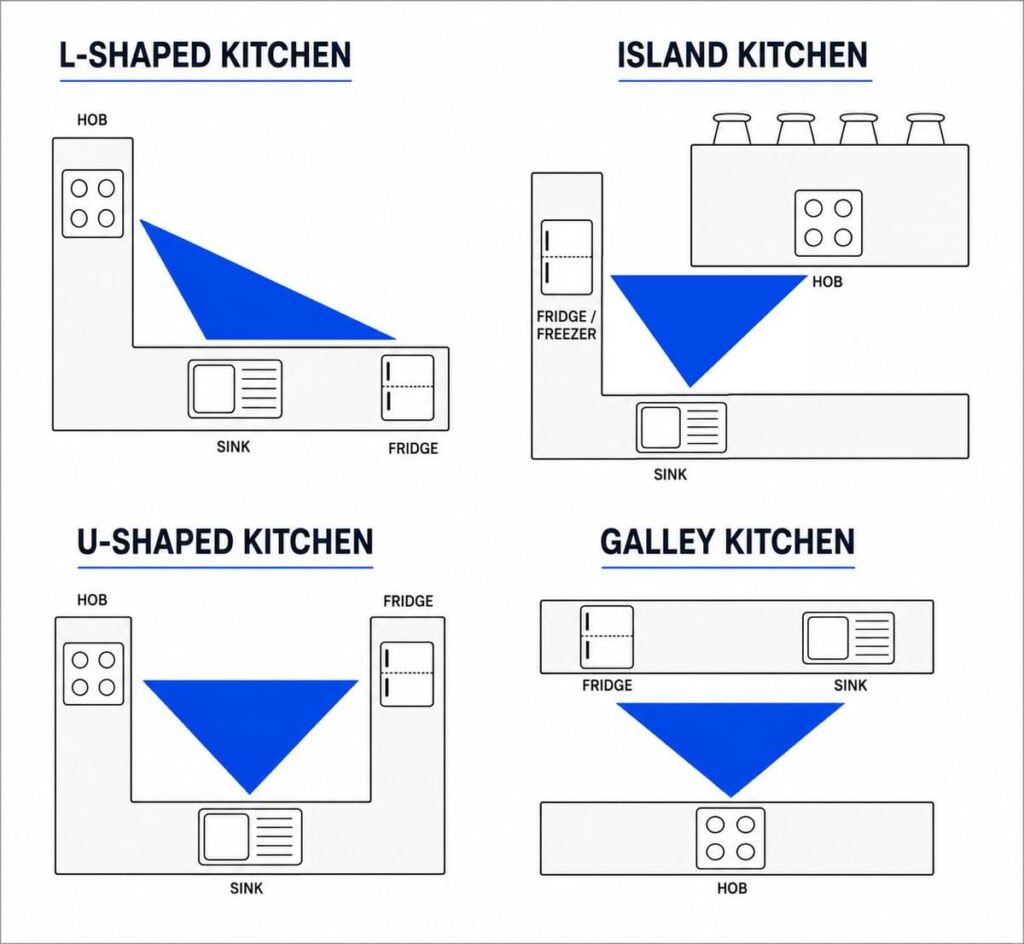
Every great outdoor kitchen starts with a layout that makes movement feel natural. This is where the kitchen triangle rule becomes your foundation.
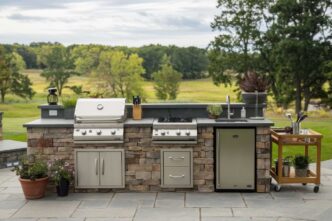
Kitchen Triangle Rule: Position your grill (cooking), prep space, and refrigeration in a triangular layout to minimize steps and improve efficiency. This creates a natural rhythm whether you are cooking solo or hosting.
- L-Shaped Outdoor Kitchen: Ideal for corners or patios, this layout keeps everything accessible while opening up space for guests. It is one of the easiest ways to balance prep and social zones.
- U-Shaped Outdoor Kitchen: Perfect for serious cooks, this design surrounds you with workspace and storage, making it easy to manage multiple tasks at once.
- Kitchen Triangle with Island: A central island creates a social hub while maintaining a functional triangle. It is great for entertaining and adds valuable prep space.
- Outdoor Galley Kitchen: Best for narrow spaces, galley layouts keep everything within arm’s reach and maximize efficiency without wasted space.
2: Choose Weatherproof Materials That Pay Off Long-Term
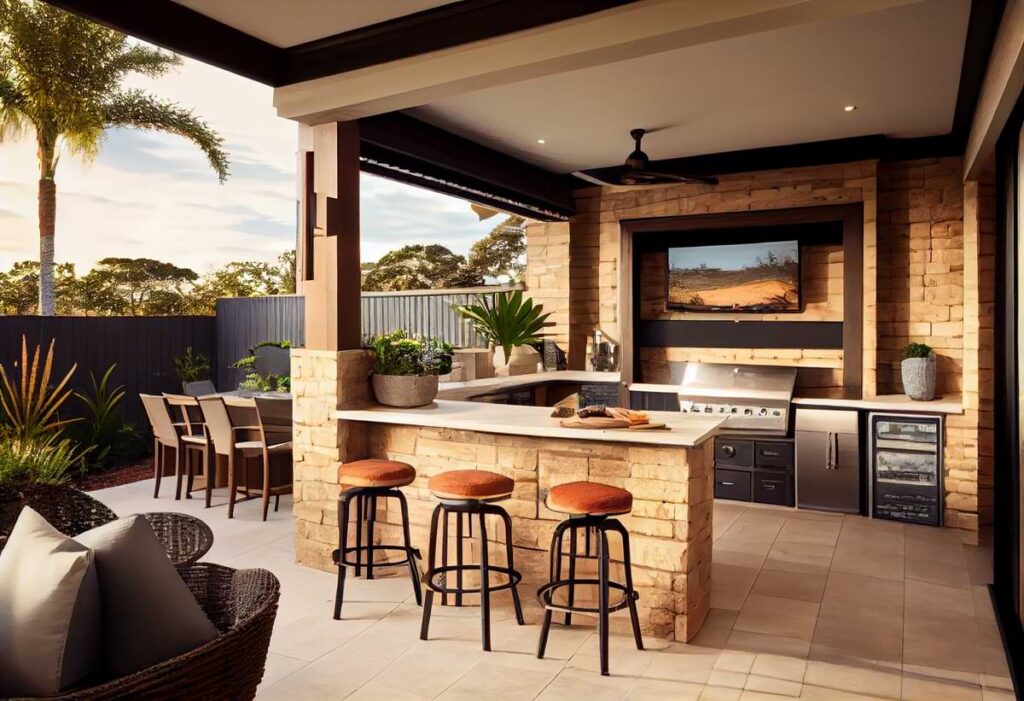
Your outdoor kitchen is only as strong as the materials you build it with. Investing in weather-resistant components protects both performance and aesthetics over time.
- Stainless Steel Appliances: Grills, burners, and refrigerators made from stainless steel resist rust and corrosion, making them ideal for outdoor exposure.
- Durable Surfaces: Stone, concrete, and sealed countertops handle temperature swings and moisture without cracking or fading.
- Corrosion Resistance Value: While premium materials come with higher upfront costs, they reduce maintenance, repairs, and replacements long-term.
- All-Season Reliability: Weatherproof builds ensure your kitchen performs consistently through rain, heat, and seasonal changes.
3: Plan Utilities and Placement Early
Behind every seamless outdoor kitchen is thoughtful infrastructure. Planning utilities early prevents costly changes later.
- Utility Access: Ensure proper placement for gas, water, and electrical lines before construction begins. This keeps installation efficient and clean.
- Drainage Considerations: Avoid low spots and design around proper water runoff to protect your kitchen and surrounding lawn.
- Ventilation Needs: Position grills and cooking zones where smoke and heat can safely dissipate without impacting seating areas.
4: Design for Entertaining and Everyday Use
The best outdoor kitchens are built for both big gatherings and quiet nights. A flexible design makes your space more enjoyable year-round.
- Multi-Zone Layouts: Create separate areas for cooking, prepping, and serving so multiple people can use the space comfortably.
- Seamless Indoor Connection: Position your kitchen near entry points to make transporting food and supplies easier.
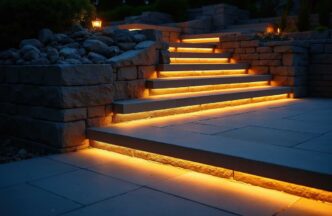
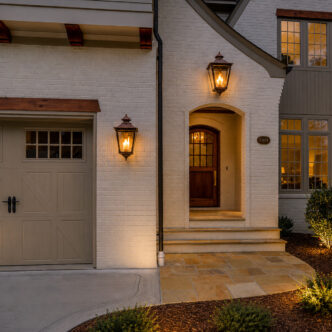
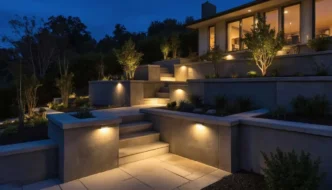
- Lighting Layers: Combine task lighting for cooking with ambient lighting to create atmosphere after sunset.
Design an Outdoor Kitchen: Bringing It All Together
The best outdoor kitchen designs start with smart layout ideas and are brought to life with durable, weatherproof materials.
Whether you are exploring outdoor kitchen island ideas or planning a U-shaped outdoor kitchen, the goal is to create a space that feels effortless to use and built to last. When done right, your outdoor kitchen becomes more than a feature—it becomes the centerpiece of your backyard.
FAQs for How to Design an Outdoor Kitchen
The best layout for an outdoor kitchen depends on your space and how you plan to use it, but popular options include straight-line, L-shaped, and U-shaped designs. A straight layout works well for small patios, while L- and U-shaped kitchens provide more prep space and better flow for entertaining. The key is to keep your grill, prep area, and storage within easy reach while maintaining clear walkways for guests.
The 3×4 kitchen rule refers to organizing your space around three primary zones—cooking, cleaning, and storage—within a compact and efficient layout. In outdoor kitchens, this often translates to keeping your grill, sink, and storage areas positioned within a few steps of each other to minimize unnecessary movement. While not as rigid as the indoor “kitchen triangle,” it’s a helpful guideline for creating a functional and user-friendly setup.
Common outdoor kitchen mistakes include poor placement, choosing non-weatherproof materials, and underestimating utility needs like power and water access. Many people also overlook ventilation, lighting, and adequate counter space, which can make the kitchen less functional over time. Planning ahead and designing with both durability and usability in mind helps avoid costly fixes and ensures your outdoor space performs well year-round.
Join our Insider list and check out the different lighting options that we have to offer.