

Table of Contents: Active vs Passive Subwoofer
- Active Subwoofer vs Passive Subwoofer
- What Is an Active Subwoofer?
- What Is a Passive Subwoofer?
- Active vs Passive Subwoofers: Comparison Chart
- Choose the Right Subwoofer for Your Space
- FAQs for Active Subwoofer vs Passive Subwoofer
Choosing between an active subwoofer and a passive subwoofer can make a big difference in how your outdoor or indoor sound system performs. Whether you’re building a backyard entertainment space or upgrading your home audio, understanding the core differences helps you get the most out of your setup.
In this guide, we will break down active subwoofers vs passive subwoofers, their pros and cons, and how to choose the right option for your space.

Active Subwoofer vs Passive Subwoofer
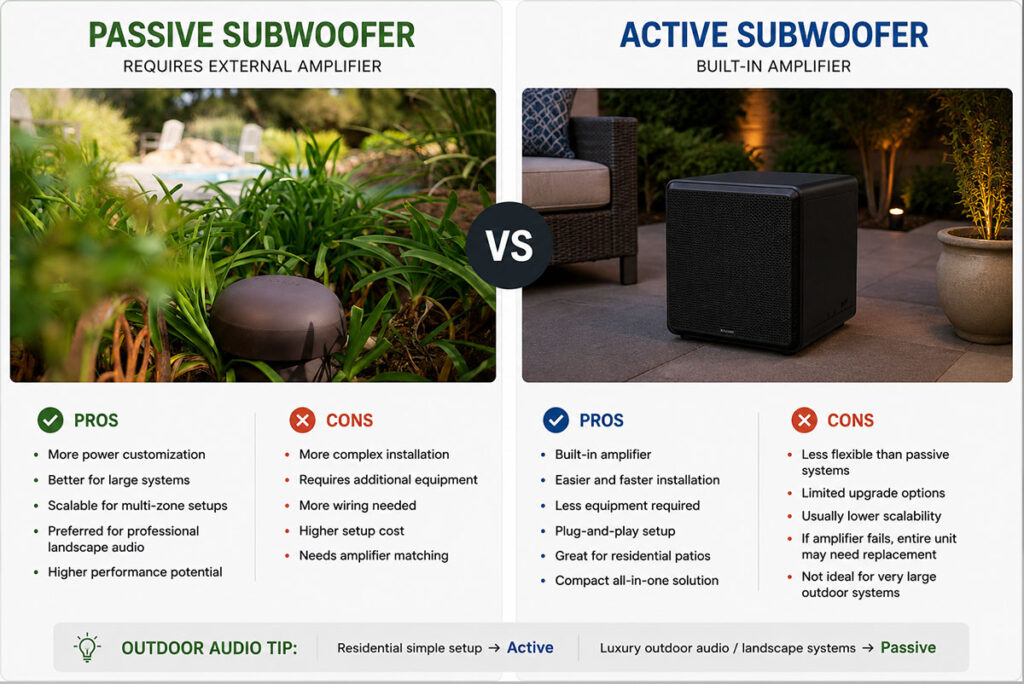
Both options serve the same purpose—delivering deep, low-frequency sound—but they do so in different ways. Your choice depends on your experience level, space, and system goals.
- Power Source: Active subwoofers are self-powered, while passive subwoofers rely on an external amplifier.
- Installation Complexity: Active models are easier to install, whereas passive systems require more setup and audio knowledge.
- Customization Level: Passive subwoofers offer more control over sound tuning compared to the plug-and-play nature of active units.
- Best Use Case: Active subwoofers are ideal for simple setups, while passive subwoofers work best in larger, more customized systems.
What Is an Active Subwoofer?
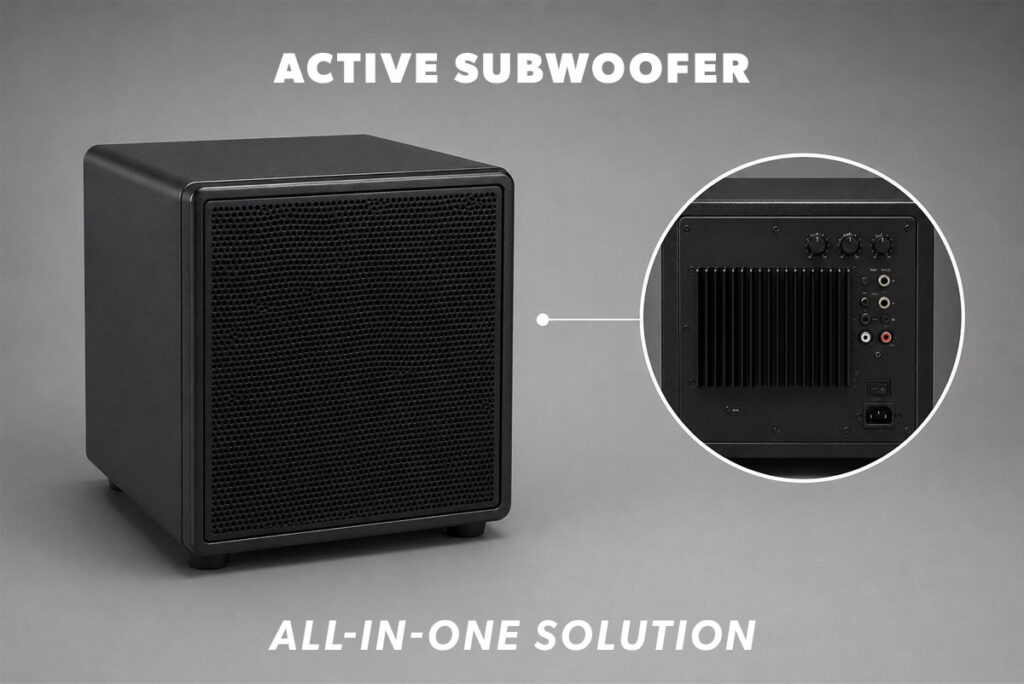
An active subwoofer is a self-powered unit with a built-in amplifier, making it a plug-and-play solution for most users. It’s designed for convenience and consistent performance without requiring extra equipment.
- Built-In Amplifier: Active subwoofers include an internal amp, eliminating the need for external power sources. This simplifies installation and setup.
- Ease Of Use: These systems are beginner-friendly and require minimal audio knowledge. You can connect them directly to a receiver or system and start listening quickly.
- Space Efficiency: With fewer components needed, active subwoofers are ideal for smaller patios, decks, or compact indoor spaces.
- Consistent Performance: Because the amplifier is matched to the speaker, performance is optimized right out of the box.
What Is a Passive Subwoofer?
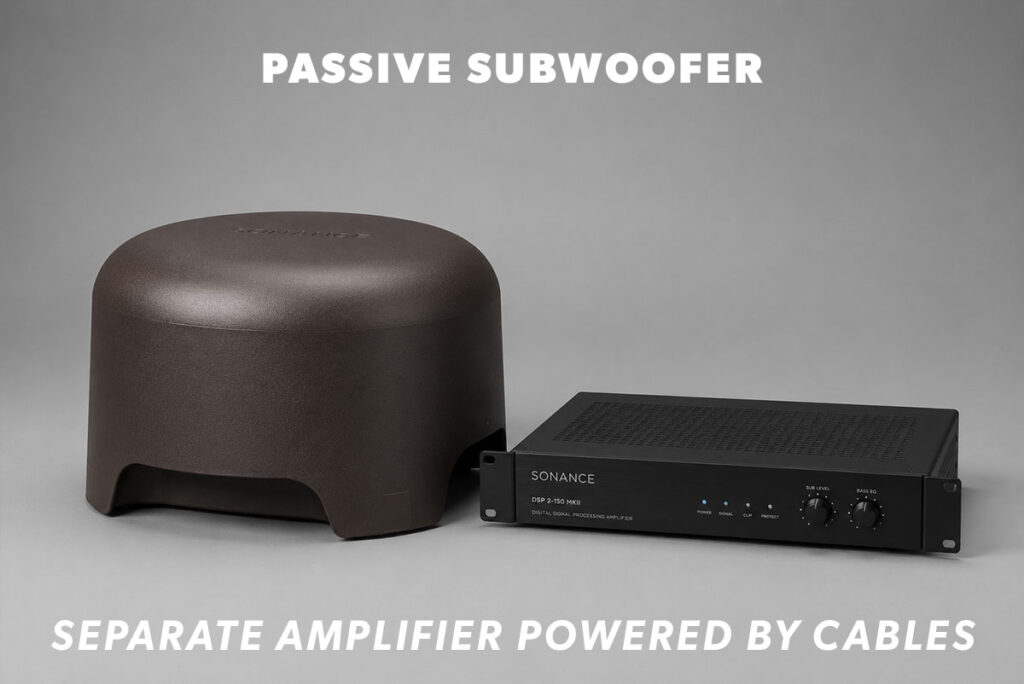
A passive subwoofer relies on an external amplifier to function, giving users more control over customization. It’s commonly used in larger or more complex audio systems.
- External Amplifier Required: Passive subwoofers need a separate amp to power them. This adds complexity but allows for tailored performance.
- Greater Flexibility: You can pair the subwoofer with different amplifiers to fine-tune sound output. This is ideal for advanced users or custom installations.
- Scalability: Passive systems are easier to expand, making them a strong choice for large outdoor setups or multi-zone audio.
- More Installation Effort: These systems require more planning, wiring, and setup time compared to active options.
Active vs Passive Subwoofers: Comparison Chart
When it comes to active subwoofers vs passive subwoofers, the best setup is the one that fits your space, your system, and how you like to listen—whether you’re hosting in the backyard or relaxing on the patio.
Here’s a quick side-by-side look to help you decide.
| Feature | Active Subwoofer | Passive Subwoofer |
| Power Source | Built-In Amplifier | External Amplifier Required |
| Installation | Simple | More Complex |
| Customization | Limited | Highly Customizable |
| Best For | Small To Medium Setups | Large Or Advanced Systems |
| Space Requirements | Compact | Requires More Components |
Choose the Right Subwoofer for Your Space
At the end of the day, the choice between a passive subwoofer and an active subwoofer comes down to simplicity versus control.
If you want a straightforward, reliable solution, active subwoofers are hard to beat. If you’re building a more advanced system and want full control over your sound, passive subwoofers give you the flexibility to dial everything in.
FAQs for Active Subwoofer vs Passive Subwoofer
Choosing between a passive and active subwoofer depends on your setup and how hands-on you want to be. Active subwoofers have a built-in amplifier, making them easier to install and ideal for most outdoor audio system installations. Passive subwoofers require an external amplifier, which offers more customization but adds complexity, making them better suited for larger or more advanced systems.
Active subwoofers can improve sound quality by delivering more consistent and controlled bass, especially in outdoor environments. Because the amplifier is built-in and matched to the speaker, they are optimized for performance right out of the box. This makes them a reliable choice for achieving balanced, full sound without needing extensive tuning.
Passive subwoofers do not inherently sound better, but they can offer higher performance in the right setup. When paired with a high-quality external amplifier, they allow for more precise tuning and scalability. However, without proper matching and setup, they may not perform as well as a well-designed active subwoofer in a typical outdoor sound system installation.